Where Craft Endures: Training the Next Generation at Hirsh London
Bursary Support
Bursary support through the Goldsmiths' Company Apprenticeship Scheme is increasing from the 2026/27 intake, with greater funding available during an apprentice's first and second years, when training costs are highest.
On a crisp winter morning in Mayfair, the signature blue frontage of Hirsh London opens into an opulent, thoughtfully curated space. Rich blues and soft golds run through the expansive showroom, where handmade jewellery sits alongside carefully chosen art and striking stones. Beyond the French windows, a tranquil Japanese-style garden with a wall of foliage gives the whole space a sense of calm and balance, reflecting the precision and artistry at the heart of the company.
Above the showroom, the workshop hums with steady focus. Large windows flood the benches with natural light as makers shape metal and bring designs to life with practiced hands. It is here that Hirsh’s commitment to true handmaking is most keenly felt, and where the Goldsmiths’ Centre’s Apprenticeship Scheme plays an essential role in sustaining the craft.
Among the team are master diamond mounter Michael Oddy and his apprentice Raphaël Moreau, whose shared journey - explored in this interview alongside insights from Owner Sophia Hirsh - reflects the essence of the trade: knowledge passed from generation to generation, skills refined through patience and problem solving, and a collective belief in the importance of keeping traditional techniques alive.
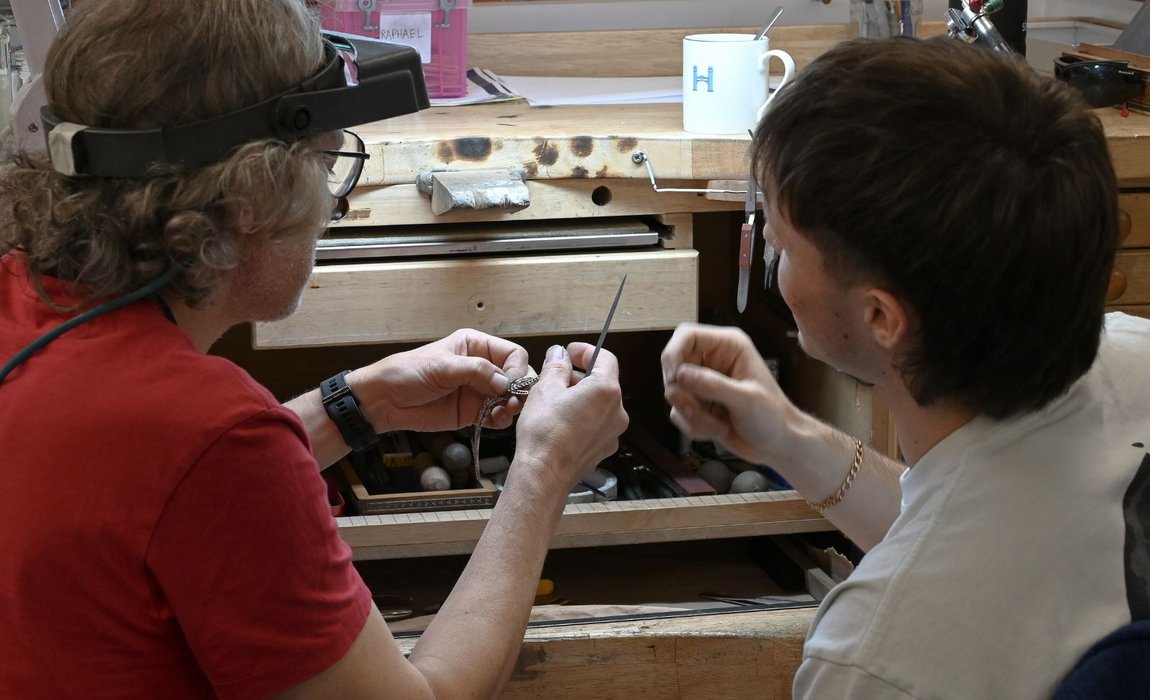
At Hirsh, apprenticeships are more than structured training. They represent continuity. In the hands of each apprentice, the future of fine jewellery is shaped, strengthened and carried forward, ensuring that handmade work remains at the heart of the industry for years to come.
Origins in the Industry
Mike: I am a master diamond mounter and I have spent around 35 years in the trade, working for a lot of different companies before joining Hirsh. I first trained as a silversmith at the Kent Institute of Art and Design in the late 1980s and found my way into jewellery almost by chance. It turned out to be exactly where I needed to be. Now, one of the most rewarding parts of my role is passing that experience on to an apprentice.
Raphaël: I am a diamond mounting apprentice at Hirsh London. I became interested in jewellery at school, taking part in clubs and small activities related to making. I enjoyed it so much that I shaped my A levels around it, studying Maths, Design and Technology, and Graphic Design.
Afterwards, I heard about the Goldsmiths’ Centre and decided that, instead of going to university, their Foundation Programme was the best route into the jewellery industry. I wanted to focus on the manual, hands-on side of making. I completed the Programme, came to Hirsh on work experience, and I have been here ever since.
Sophia: I am the owner of Hirsh London, a family business specialising in handmade jewellery in the heart of London since 1980. I have been in the industry for 25 years and running the business since 2008. My background includes roles at Asprey, Garrard, Burberry and Hermès, so I have always been surrounded by fine craftsmanship and the most exquisite objects of art.
“For us as a business, advancing craftsmanship is essential. We work with a team whose combined experience is around 200 years. We could not be where we are without them. In a world that increasingly favours speed, cost efficiency and computer aided design, I feel very strongly that investing in human craft and passing on those skills is vital.”
The Foundation Programme - Offering a Bedrock of Skills
Raphaël: The Foundation Programme at the Goldsmiths’ Centre allowed me to experience lots of different skills and specialisms. I went in thinking jewellery was just jewellery. I came out knowing about setting, diamond mounting, chasing, engraving and more, and I was able to choose the path that suited me.
“The Programme also builds the basic skills employers need, like using tools properly, milling metal and soldering. These are things you would have to learn anyway once you enter the trade, so it prepares you well for workshop life. Through the Programme and Day Release, I also built a network of peers, from setters to chasers, whom I can now call on when I need advice. It keeps that connection between the younger jewellery generation alive.”
Mike: When Raphaël arrived, he already had a very good basic knowledge of the tools and some of the processes. That makes an enormous difference. If the baseline is too low, you end up having to strip everything back and start again, which is counterproductive for both of you.
Life in the Workshop: Learning by Doing
Mike: There is no such thing as an average day in our workshop. One day everyone is involved in a large, complex bespoke piece that takes weeks. The next, you might resize a ring in an hour. The exciting part is that almost everything we do is bespoke. Each stone is different in shape, depth and character, so every job presents new problems to solve.
While many workshops now rely heavily on castings, CAD and lasers, a high percentage of what we do is still made by hand from fresh bullion metal. You get your tools out and manipulate that into what you are making. That is what handmade truly means, and it is increasingly rare.
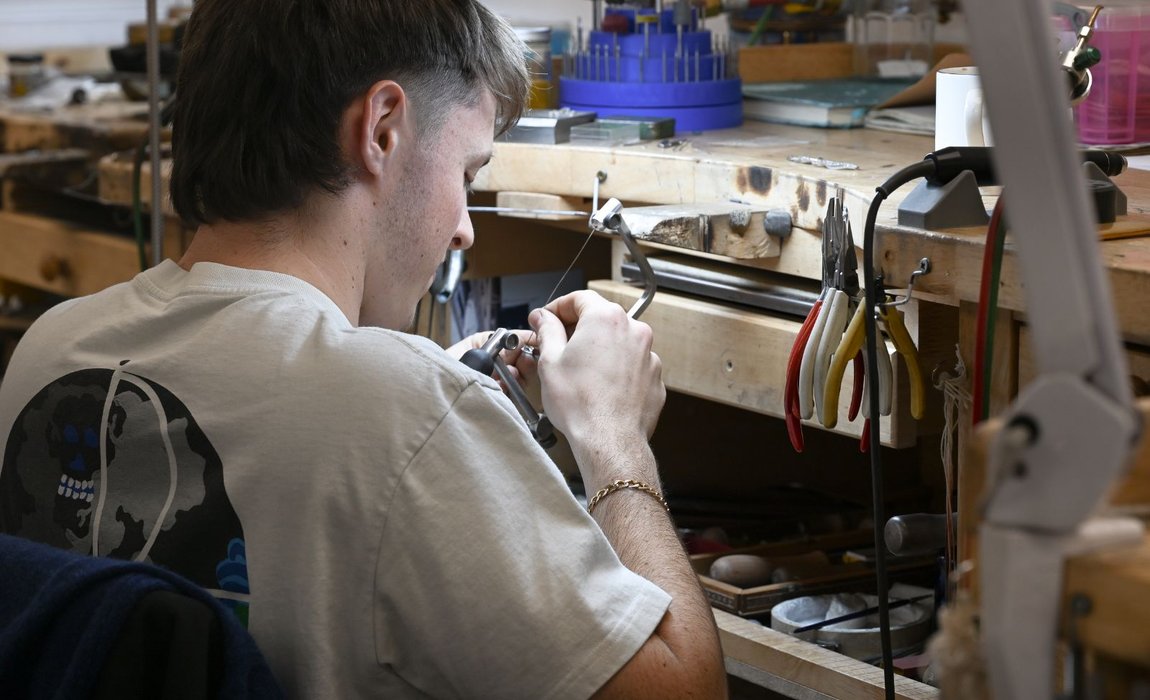
Raphaël: I start at 8.30am like everyone else and usually finish at 5pm. Most of my day is spent at the bench, working by hand. I split my time between pieces for the boutique and practice pieces in silver to develop my skills.
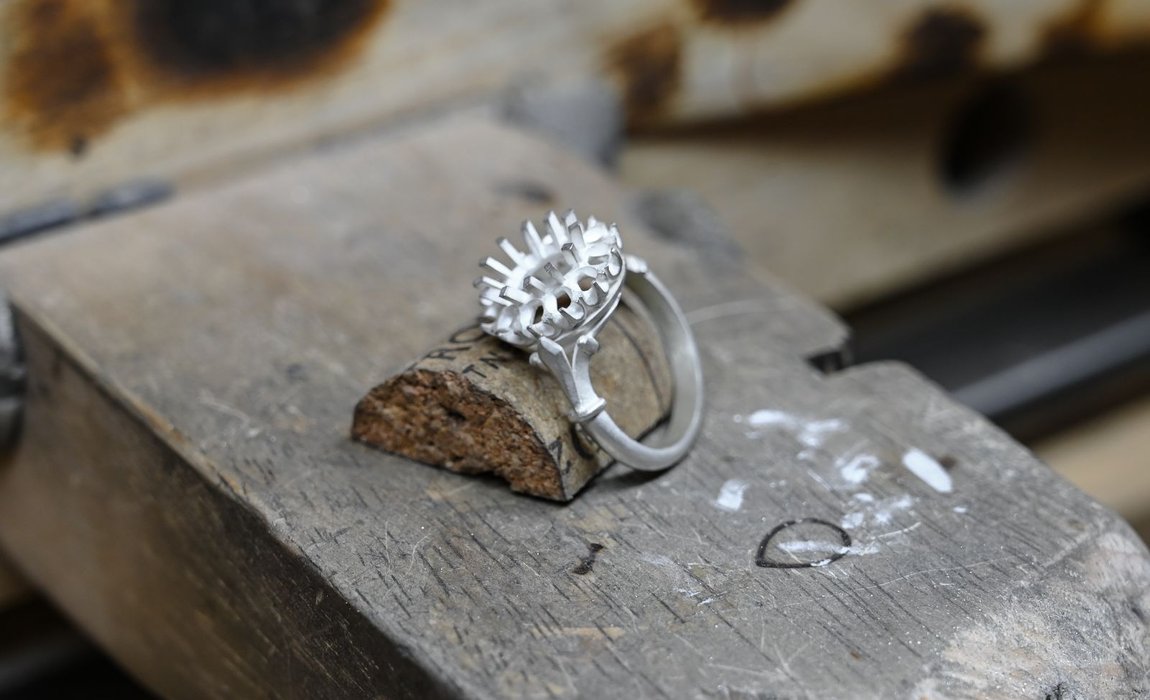
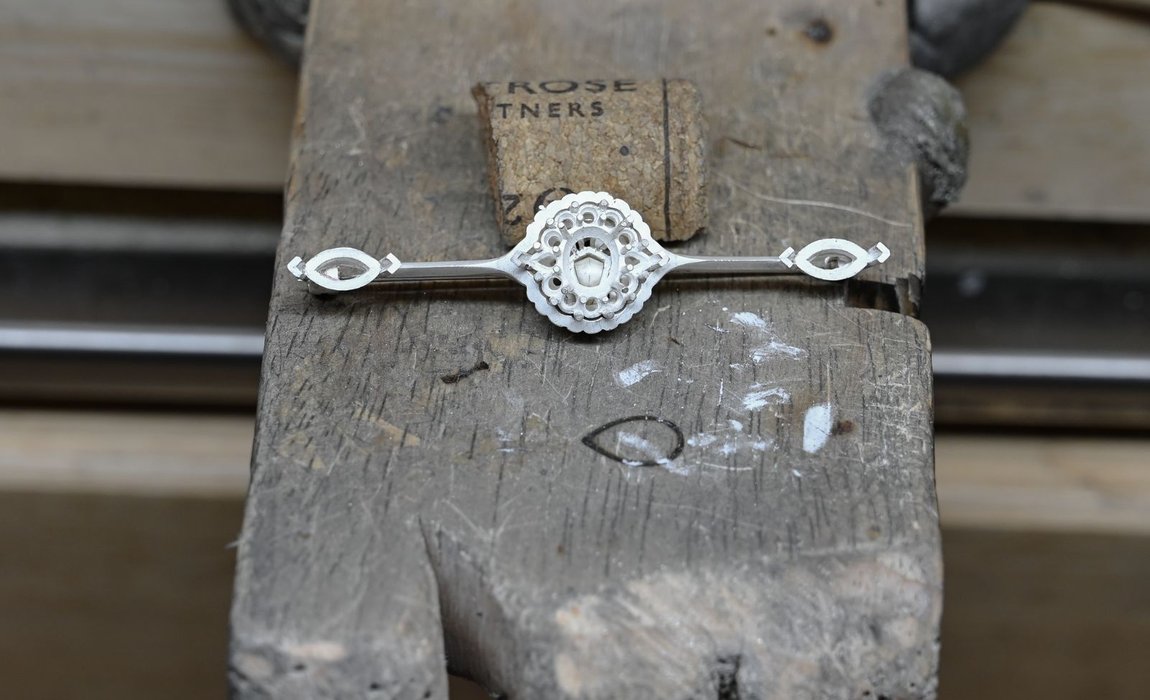
Those practice pieces are a key part of being an apprentice. You learn on live jobs, but you also learn by making things like coronet clusters which you might never make again in your career. They help you understand different types of mounts and how everything fits together.
“I also help maintain shared equipment, collect stones from suppliers and take finished pieces for hallmarking at the Assay Office. It is a small part of my day, but it teaches you responsibility for the wider workshop.”
Commuting from Cambridge means early starts, but if you are motivated it is manageable. The Foundation Programme already eased us into a working rhythm, with full days and no half term in the way school has. Moving into an eight-till-five workshop day is challenging but very doable if you want to be here.
Challenges, Growth and the Power of Mentoring
Raphaël: One of the hardest things is patience. My problem is not so much the hand skills, but wanting to be good too quickly. You reach a point where your technical ability is strong, but what really takes time is to acquire speed, judgment and experience.
You also have to learn to switch between metals and techniques. You cannot treat platinum the same way as gold, and a lot of your early practice is in silver. Soldering behaves differently on each metal. That versatility is mentally demanding but essential.
Mike: You cannot put someone straight onto gold because of the cost. Apprentices start in other metals and build up. One of the biggest skills they develop is problem-solving. Jewellery is full of small crises - things not fitting, stones behaving differently, unexpected flaws. The heart of the job is knowing how to fix those problems in a way that is structurally sound, comfortable to wear and beautiful enough to last for generations.
Mistakes are part of that process. You might have to melt something down and start again. There are natural mistakes and preventable ones, and everyone has bad days. The important thing is to learn quickly and to notice when your mindset is not right, then reset before you risk the work in front of you. Seeing Raphaël begin to recognise that in himself is a big step.
Raphaël: In the workshop, I learn from five different mounters with different backgrounds and strengths. If I only had one mentor, I might become a carbon copy of them. Instead, I see different ways of tackling the same problem. Sometimes Mike shows me one approach, Paul another, and then I choose what works best for me and for the piece.
The one-to-one aspect is very strong. I sit next to someone with over 30 years of experience, constantly asking questions and getting feedback. That kind of tailored input is something you rarely get in a classroom.
Mike: From a mentor’s point of view, teaching is as much about people as it is about technique. I expected the technical side to be the challenge, but actually it is more about understanding personalities, the way someone thinks, what motivates them.
“Having an apprentice pushes you to question your own habits as well. You realise where you are set in your ways, and sometimes you adopt a better method you have just explained out loud.”
Why Employers Should Consider Taking an Apprentice
Sophia: For Hirsh, taking on an apprentice was a very deliberate decision. We had been thinking about it for a while because we want to invest in craftsmanship and it is at the heart of everything we do. Apprenticeships are part of a 700-year-old tradition and give a thorough foundation across multiple skills. For us, it felt like a perfect fit.
“It is also a long-term investment. Training an apprentice inevitably takes some productive time away from a master craftsman. You have to be willing to accept that and see the bigger picture. In return, you gain someone who understands your style, your ethos and your way of working from very early on. That is an enormous advantage.”
Every business is different, so employers need to decide whether it suits their model. But if, like us, you care deeply about craft, apprenticeships are a powerful way to sustain and shape the future of your workshop. Raphaël contributes real value already: he is working in precious metals, supporting prototyping and product development, and bringing his own design interest and problem-solving skills to the table.
Mike: Training an apprentice is a sacrifice and a privilege. You cannot spend all day watching over them, but you can set clear tasks, step back, and then review and correct. Over time, they start to take on their own jobs, in different metals and with proper time estimates, and you see them progress.
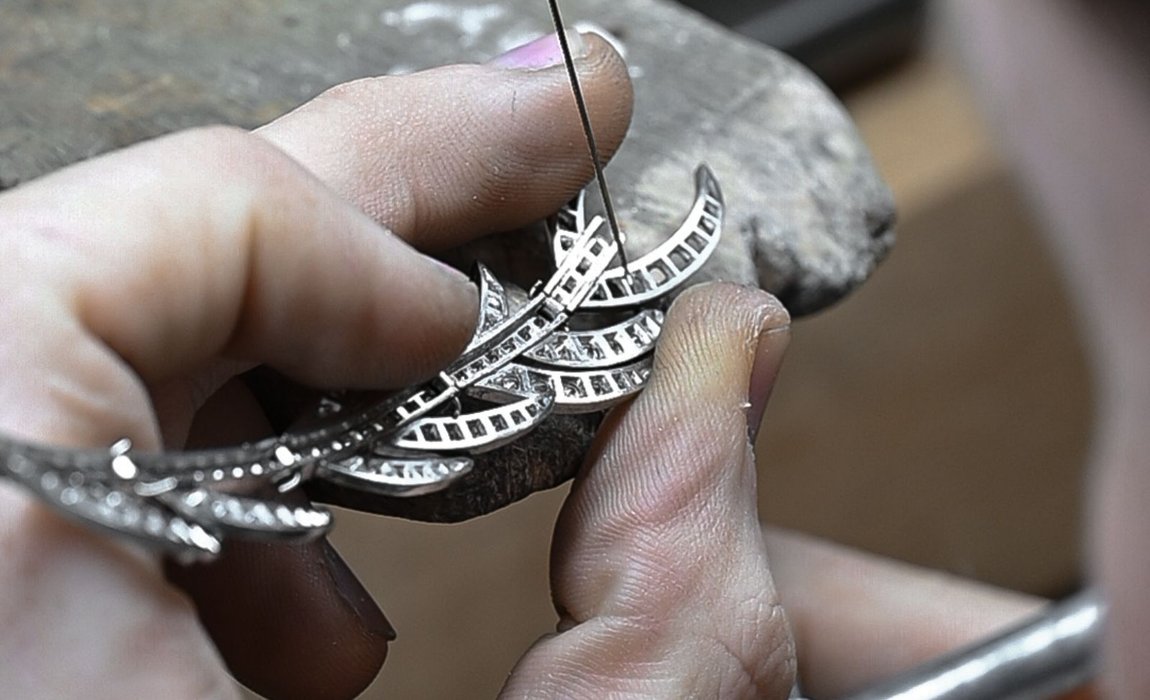
“For the team, having an apprentice encourages everyone to share knowledge instead of guarding it. In our workshop, different mounters are happy to explain their own approach. That openness improves the whole environment and keeps the craft alive.”
Looking Ahead: Futures in Craft
Raphaël: Once I finish my apprenticeship, I want to stay in diamond mounting and keep expanding my skills, especially in stone setting. I find it hard to choose just one specialism, because I enjoy so many aspects of the work, but I definitely want to stay close to bespoke, handmade pieces - the kind we make here at Hirsh. Every job is different and brings its own challenges and that is a big part of the appeal.
One day, I would love to explore running my own business and working alongside peers whose skills complement mine. That is a long way off, but diamond mounting will always be at the centre of what I do.
Mike: Versatility is more important now than ever. In the past, each stage of a piece might have been handled by a different specialist. Today, being able to understand and, where appropriate, carry out multiple processes yourself is a real advantage. At the same time, you have to know your limits and respect the depth of expertise a full-time setter or engraver brings. Apprenticeships are one of the best ways to build that breadth while honouring the depth of traditional skills.
Final Thoughts and Advice
Mike: My advice to anyone considering this trade is not to be put off. The job satisfaction you get from doing something artistic and highly skilled is huge. It takes time to reach the point where you are handling the most exciting work, but I never dread coming in on a Monday. If you value that kind of fulfilment, this is a path work taking.
For employers, if you have the drive to support someone and the work that can sustain them, taking on an apprentice can be transformative – for them, for you and for the craft.
Raphaël: For newcomers, I would say ask questions constantly and choose a specialism you genuinely enjoy. It is a tough industry if you are not motivated, but if you are, it is a small world where you can aim very high. Work hard, stay curious and use programmes like the Foundation to find what truly excites you, then focus your energy there.
“Sophia: From a business perspective, apprenticeships help secure the future of our craft and our company. They bring fresh energy, new ideas and a sense of continuity. For us at Hirsh, taking on an apprentice has been entirely in keeping with who we are and what we believe in. I would encourage any employer who values craftsmanship to seriously consider it.”