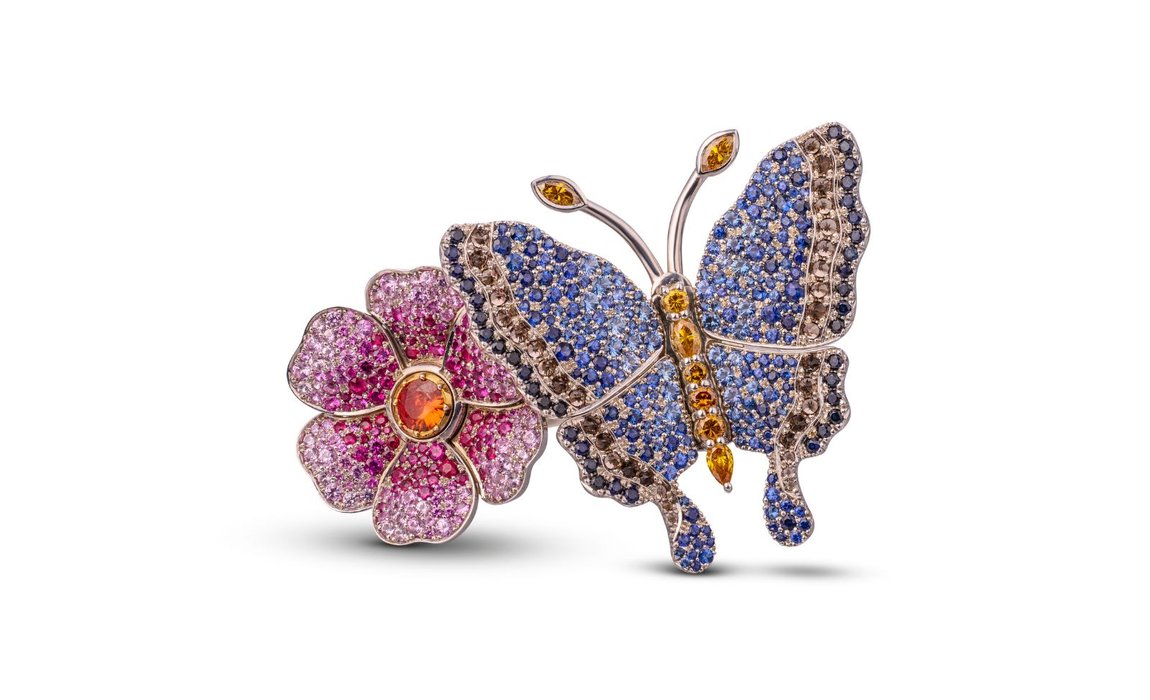
Training the Next Generation: Inside a Goldsmiths’ Centre Apprenticeship
Bursary Support
Bursary support through the Goldsmiths' Company Apprenticeship Scheme is increasing from the 2026/27 intake, with greater funding available during an apprentice's first and second years, when training costs are highest.
Together, Alysha Strong and Michael Summers represent two sides of the jewellery industry: its future and its foundations. As an apprentice entering the trade, Alysha brings fresh energy and a contemporary approach to time-honoured crafts. Michael, Director of Summers Diamond Setting, with decades of experience behind him, carries deep technical knowledge shaped by years at the bench.
In a recent interview, both reflected on the value of their working relationship and the role apprenticeships play in sustaining the trade. When these two perspectives come together, they create something stronger than either could achieve alone. Apprenticeships enable established craftspeople to pass on hard-earned skills that might otherwise be lost, while giving new entrants the opportunity to learn within a real working workshop environment. These makers will go on to shape the future of the industry, combining strong foundations in traditional skills with new ideas, evolving technologies and modern approaches.
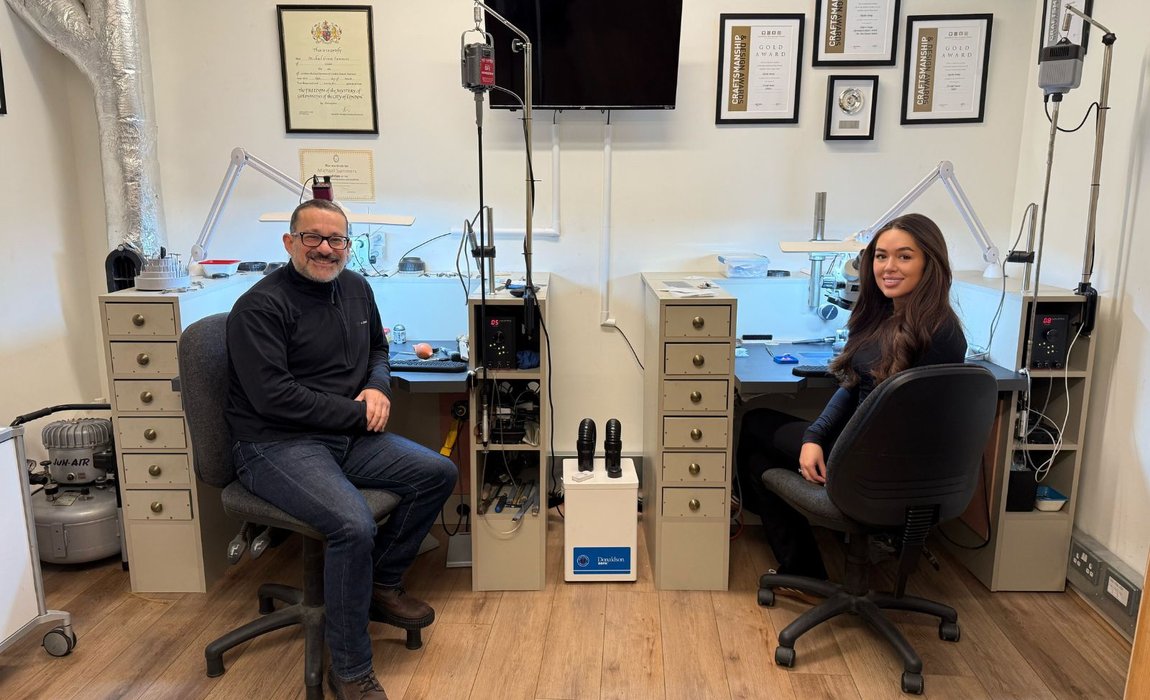
This exchange sits at the heart of the gold standard of craft training: the Goldsmiths’ Centre Apprenticeship Scheme. It protects heritage techniques while creating space for innovation, ensuring the sector remains rooted in tradition while responsive to change.
For the Goldsmiths’ Centre, partnerships like this demonstrate the value of structured training routes that connect generations of makers and help sustain high standards of craftsmanship across the industry.
The Start of a Shared Journey
Michael: The Goldsmiths’ Company already knew of me, as I’d previously been involved in training another Goldsmiths’ Company apprentice.
“I was asked to offer work experience to Alysha, and that’s how our working relationship began. She has since become our apprentice and is a very impressive young person who has been a great help since joining the team.”
Alysha has very good hand skills, which is an important quality in any craftsperson. That was one of the first things I noticed. She also had a good attitude and was keen to do well. She wanted to impress, and she did that during her work experience.
It’s rare to find someone who takes to diamond setting so quickly, understands what’s needed, and develops the skill quite naturally. She was very good with some of the tasks I gave her and excelled during her first work experience week. That may also reflect the training she received on the Foundation Programme at the Goldsmiths’ Centre. By the time she came to me, she already had some bench experience.
Alysha: At school, I was creative and did a lot of design. I knew someone in the trade, which is how I first became aware of it, and eventually joined the Programme. Originally, I wanted to be a designer. During my time on the Programme, I tried a little bit of everything and found I took to setting the quickest compared to other specialisms. I enjoyed it the most and picked it up more quickly.
A Typical Day in the Workshop
Michael: We have a very structured day: we start at 8.30am, have a tea break at 10.30am, lunch at 12pm, another tea break at 3.30pm and then finish at 5pm. Sometimes we stay later, but that’s the general structure.
It’s quite an easy-going atmosphere. We chat as we work and often have the radio on; it’s pretty relaxed. Some days are busy, with the doorbell constantly ringing, and we might take it in turns running around. But we always try to make it an enjoyable place to work and make the most of it.
Alysha has now reached the point where she can be trusted to manage a project on her own. I give her quite a lot of responsibility, but she takes it on. She wants to do it and she runs with it. There’s no fear.
An Award that Celebrates the Master-Apprentice Relationship
Alysha: In 2023, I won the Theo Fennell Apprentice & Master Award at the GC&DC Awards for my Circle of Life Pendant. I don’t actually know where I got the idea from for the pendant - maybe my subconscious. I just decided that I was going to do that design.
Michael: With competition pieces, I really try to step back so that it’s 100 per cent Alysha’s work. I don’t even give much of an opinion. If you start interfering, it’s not their piece anymore. I’ll offer a bit of advice, but not in the same way as with a commercial job.
That way, Alysha can really take pride in it, because she knows it’s her work - but I also take pride in the fact that she’s achieved it. It’s nice to know apprentices can take what you’ve taught them and achieve something with it.
“I enjoy teaching and seeing someone begin to understand different making techniques. I get a real buzz and a real sense of pride from imparting that knowledge. When someone you teach excels, it’s a great feeling. It reflects on you as a mentor - your years of knowledge and skill are being passed on. If I don’t pass my skills on to somebody, they’ll just be lost. A lot of craftspeople hold everything in and don’t teach others. But I said from the beginning that I would teach Alysha everything. I don’t hold anything back.”
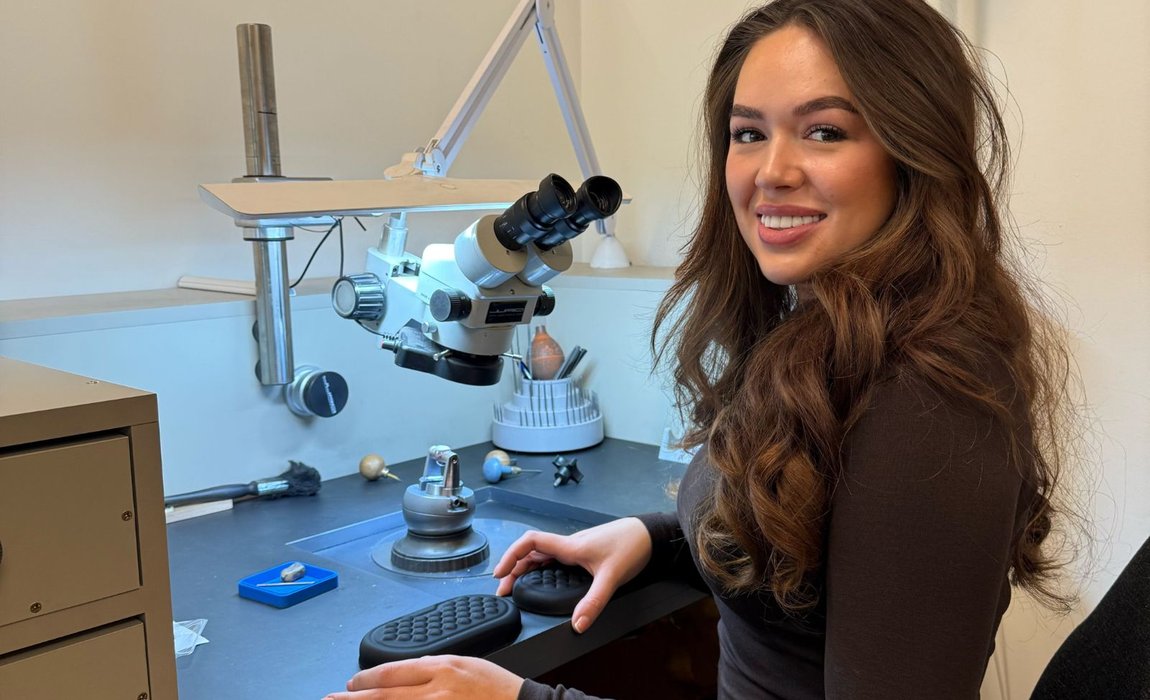
Passing on skills is especially important now. The trade is changing, particularly with the introduction of new technology, including micro-setting, which has really come to the fore. Techniques have evolved and we now work with microscopes and different tools. Otherwise, it’s still very traditional - old skills, old tools - with that one main shift.
Working with a microscope allows you to adopt a better sitting position than traditional setting. I also have a camera on the microscope, which means you can show people much more detail, and that really helps. Some older techniques are falling away because newer ones are more efficient. Micro-setting is quicker, more efficient and gives a better finish.
It looks different, but I do still like what old-fashioned traditional pavé looks like when it’s done properly - which not many people can do. Even in the past, very few setters could do it well. When it is done right, it looks really good and has a certain charm. That’s important to understand and to teach, even though I now use this technique very rarely.
“As people embrace new technologies, other techniques start to fall behind, particularly traditional ones. Fewer people are teaching these skills because they’re not always seen as necessary or in demand, but I think it’s important for newcomers to the industry to learn them as well. Otherwise, they’ll be forgotten. There’s already so much in the history of our craft that has disappeared.”
Advice for Industry Newcomers
Alysha: I’d say try everything and put your all into everything. If something doesn’t work out, there’s always another technique or another way to do something. Don’t get stuck. If you’re taught one way and it doesn’t work for you, that’s normal. Another way might work better, you just have to find it.
Michael: Perseverance, lots of practice, and finding what you enjoy - finding your own way as Alysha says. It’s a great trade. It’s not like a typical job because we’re making things. There’s business around it, of course, but it’s fun. It sounds like work, but it’s fun. That’s why we enjoy our days.
We get a real thrill from the jobs we do and from trying to make things look beautiful, because how something is set is really important. Unfortunately, setting is often seen as secondary in the trade, but Alysha has learned over the years how important it is. If it’s not done properly, the whole job is ruined - especially with the price of gold these days - not to mention the risk of damaging stones.
We see some lovely gemstones, beautiful colours and nice designs, and it’s very enjoyable.
Why Apprenticeships Matter
“Michael: The apprenticeship scheme trains young people to be excellent craftspeople, and it’s important that it exists. It’s a very high level of training, which is not easy to come by in the modern world, where everything is fast-paced and focused on money and speed rather than quality.”
For myself and the Goldsmiths’, it’s about how good the work can be. It has to be as good as it possibly can be. That’s why the apprenticeship scheme is important: to maintain a high level of craftsmanship and keep these skills alive. Otherwise, that level of quality will be lost.
For young people who haven’t found the scheme, it may be difficult to find a way into the trade unless you already know someone. What we really need to be doing is expanding the industry in the UK. When young people come through the Foundation Programme and the apprenticeship scheme, it gives them opportunities they wouldn’t get anywhere else. With so much mass production now, people don’t always understand the value of becoming skilled craftspeople.
Alysha: When people think of jewellers, they usually think of shops and big companies that might not struggle to find staff. The people actually in the trade often find it harder, yet smaller, independent makers, mounters, diamond mounters and engravers usually have more to teach than large companies.
These industry jobs aren’t something you’re usually aware of as a young person - I never thought about them, I eventually got into the trade because I knew someone already in it. So we need to get the word out that these jobs exist.
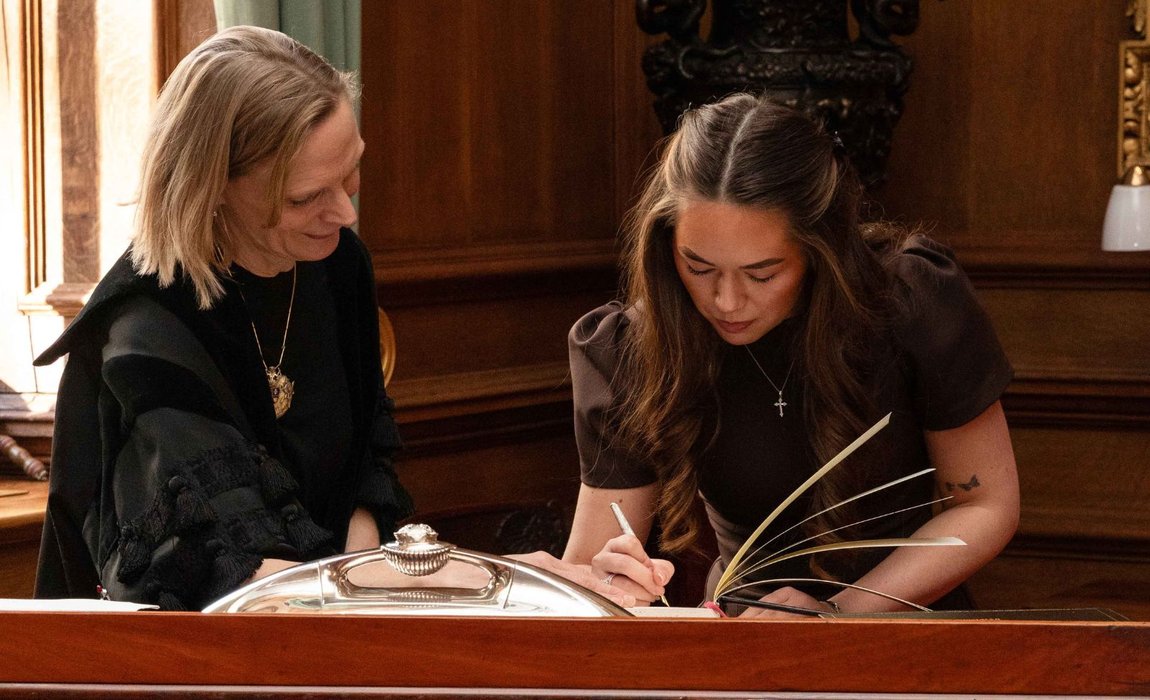
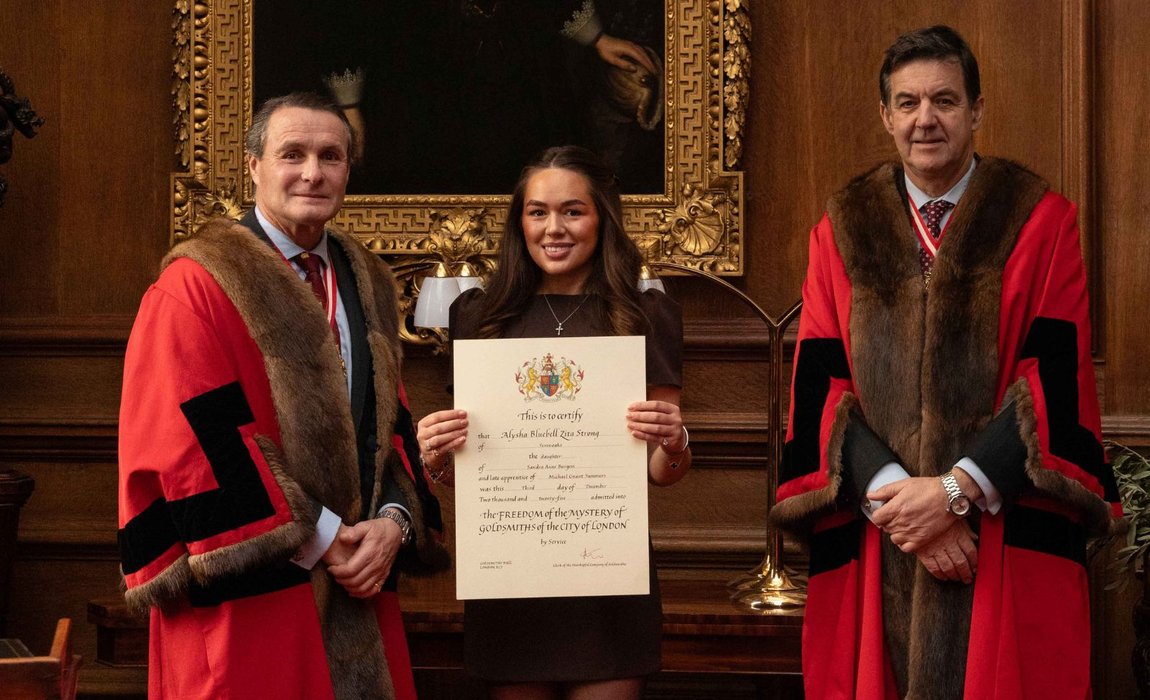
More recently, Alysha has completed her apprenticeship with Michael by producing a Masterpiece, or final piece which demonstrates all the skills learned throughout her apprenticeship. Having exhibited the piece as part of the ‘Apprentice to Masterpiece’ exhibition at the Goldsmiths’ Centre in 2026, Michael reflects that “Alysha has been an absolute pleasure to teach; she works with immense desire and determination to meet the exceptionally high standards required in this craft. Her technical growth is reflected in her impressive Masterpiece and beyond her craftsmanship, her skills have expanded to include workshop and client management. With the training and support Alysha has received over the course of her Goldsmiths’ apprenticeship I am confident she will go on to continue to achieve great success in her career.”