Weaving, Folding, Anodising How Caitlin Murphy Forged Her Own Path in Silversmithing
From lockdown experiments, folding paper and reshaping aluminium cans, to exhibiting at Shine, Collect and Goldsmiths’ Fair, Caitlin Murphy’s practice has evolved through persistence, fearless experimentation and a willingness to challenge traditions.
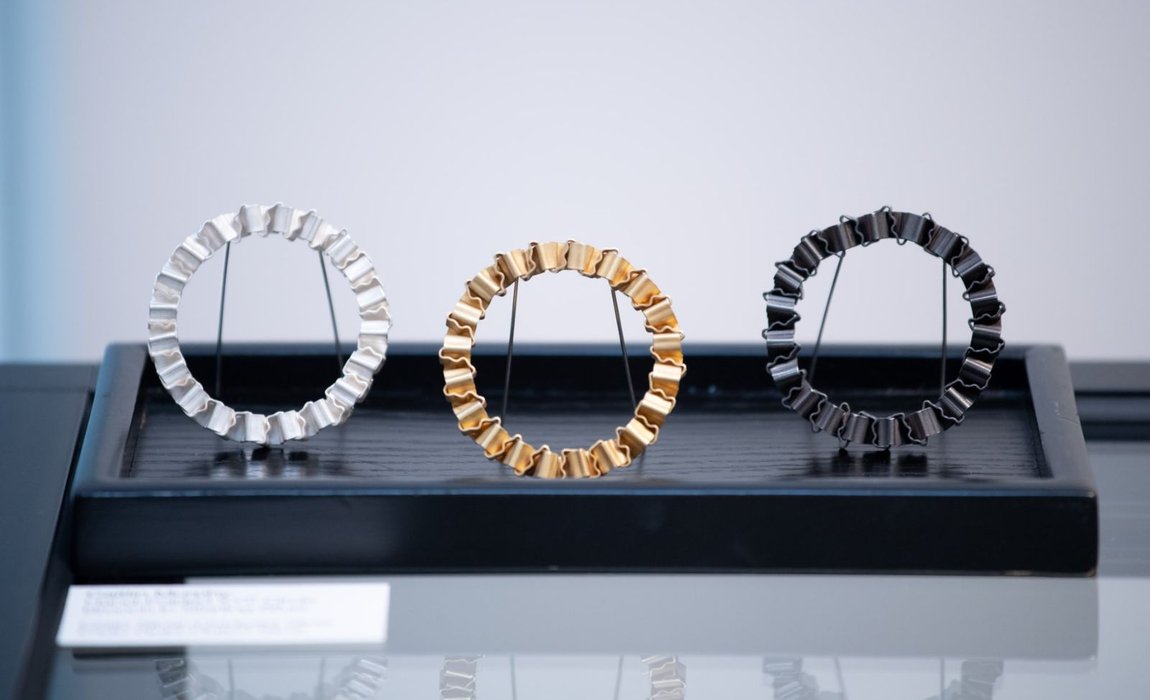
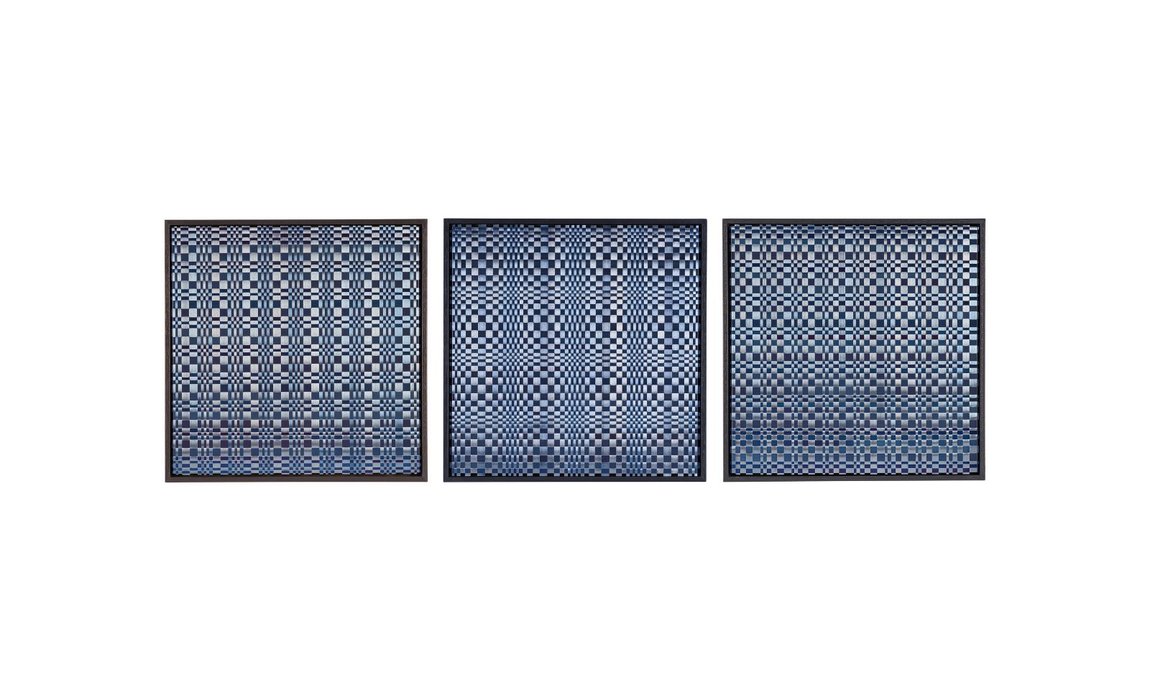
A third-generation silversmith from Northern Ireland, Caitlin once resisted precious metals. Yet, since then she has forged her own material language through weaving, concertina folding, and anodising, creating works that range from small-scale jewellery to large sculptural forms. By 2022, she had graduated with first-class honours from Glasgow School of Art and continued her studies at Bishopsland Educational Trust, supported by the Queen Elizabeth Scholarship Trust (QEST) Emerging Maker Scholarship and the South Square Trust. Her journey came full circle when she returned to Glasgow School of Art for a year-long Artist Residency in 2024.
For Caitlin Murphy, being authentically herself is an important part of her practice. At the Goldsmiths’ Centre, she has found a community that allows her to grow as a maker and business on her own terms. From her earliest beginnings, the Centre team has supported Caitlin through training programmes like Shine, the Goldsmiths’ Fair’s Emerging Business Bursary, co-curated retail opportunities at the London Museum Docklands shop and Dover Street Market, and exhibitions such as Interwoven: Jewellery Meets Textiles, helping her refine her practice, grow her business, and build lasting confidence.
Caitlin is not just following a path in silversmithing; she is forging one entirely her own. In 2025, we sat down with her to capture, in her own words, her journey, her process, and the future of her work.
Creative Beginnings: From Paper to Precious Metal
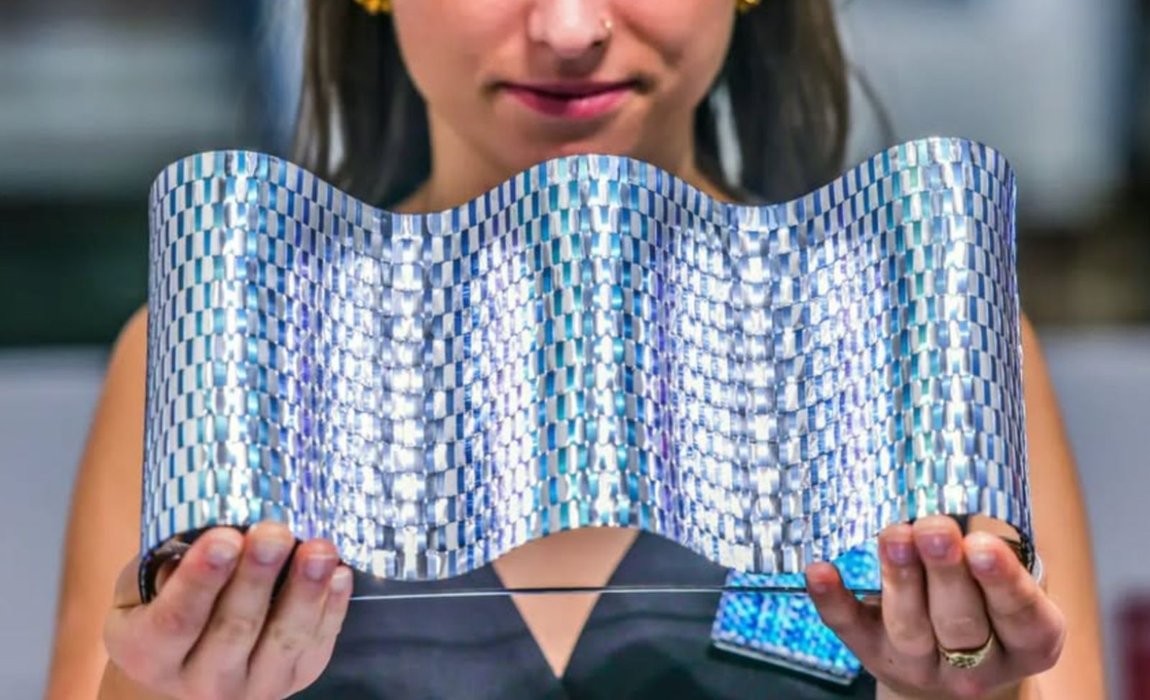
“Creatively, things really started during lockdown. I spent two years working in my bedroom and began experimenting with paper, weaving and folding it, then moving on to aluminium cans. That led to my degree show work in brass and copper at Glasgow School of Art.
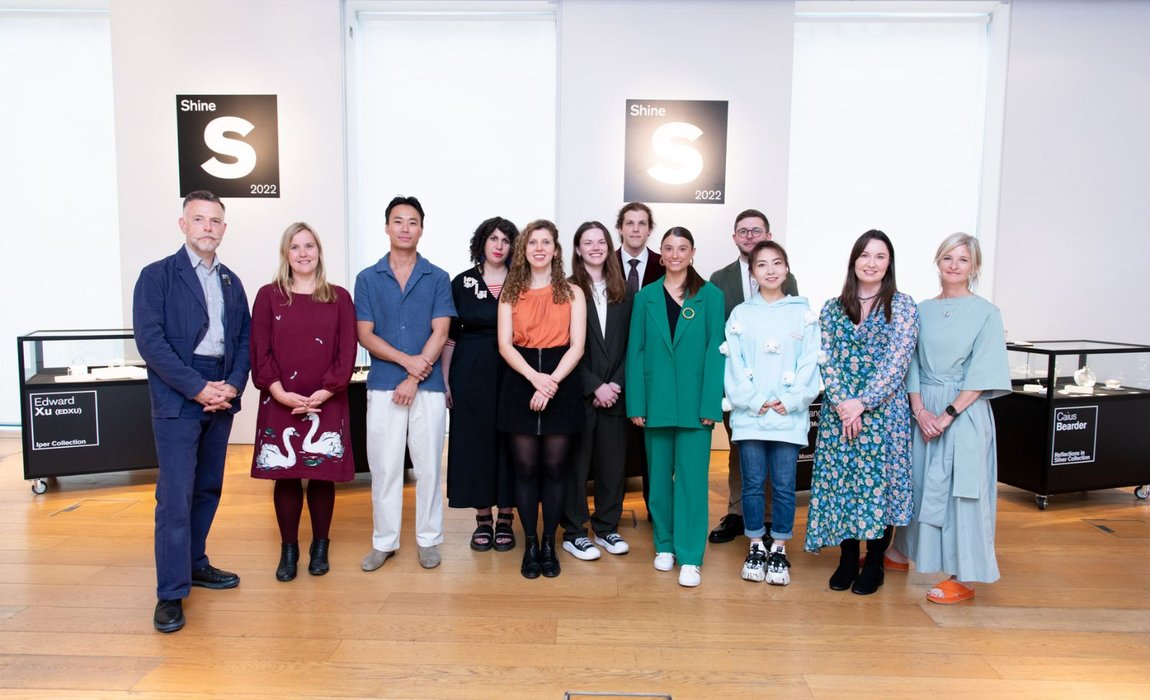
After being chosen for Shine 2022 at the Goldsmiths’ Centre, I moved to Reading to complete Bishopsland Educational Trust’s Postgraduate Programme. While my base metal weaving was sometimes met with resistance, its strong traditional focus challenged me to adapt my practice and ultimately encouraged me towards working in silver.
Honestly, I don’t particularly enjoy working with silver. I use it when it elevates a piece, often visually, but I prefer materials that don’t tarnish as much over time. With silver, the surface can alter and tarnish; that bothers me because the pattern gets lost.
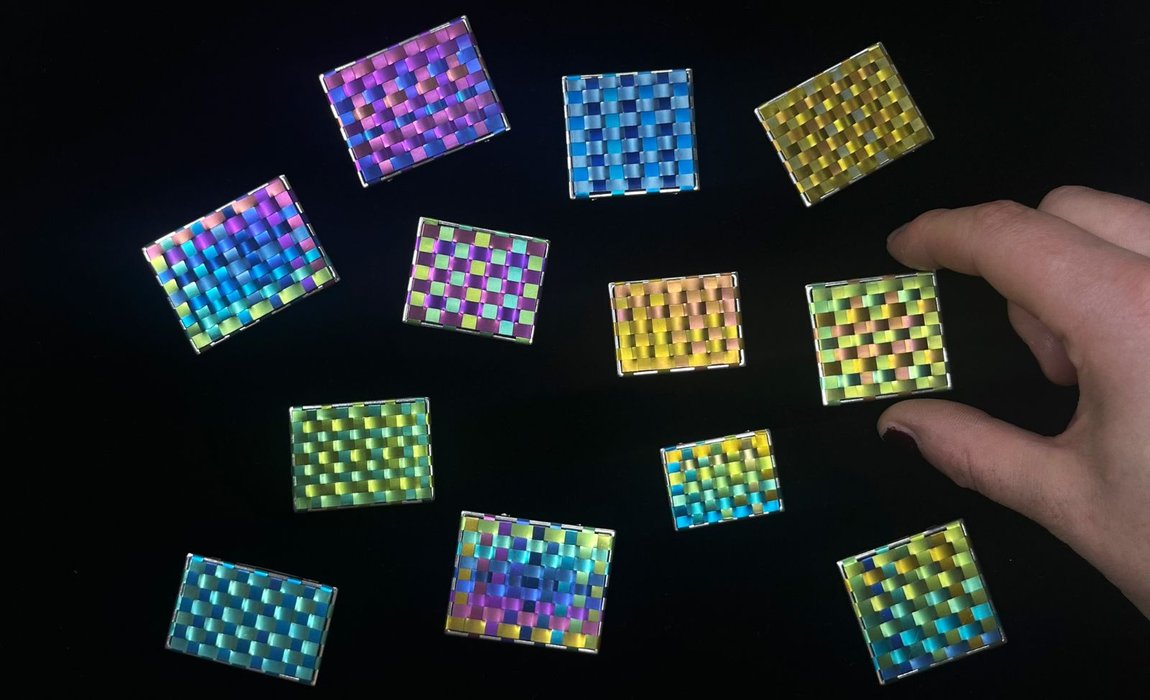
I prefer base metals because I like giving the material its value through what I do to it. Recently, I made large titanium pieces for Collect, and while the material value was fairly inexpensive, the time and labour involved are what give the work its value. That feels much more aligned with how I think about making.
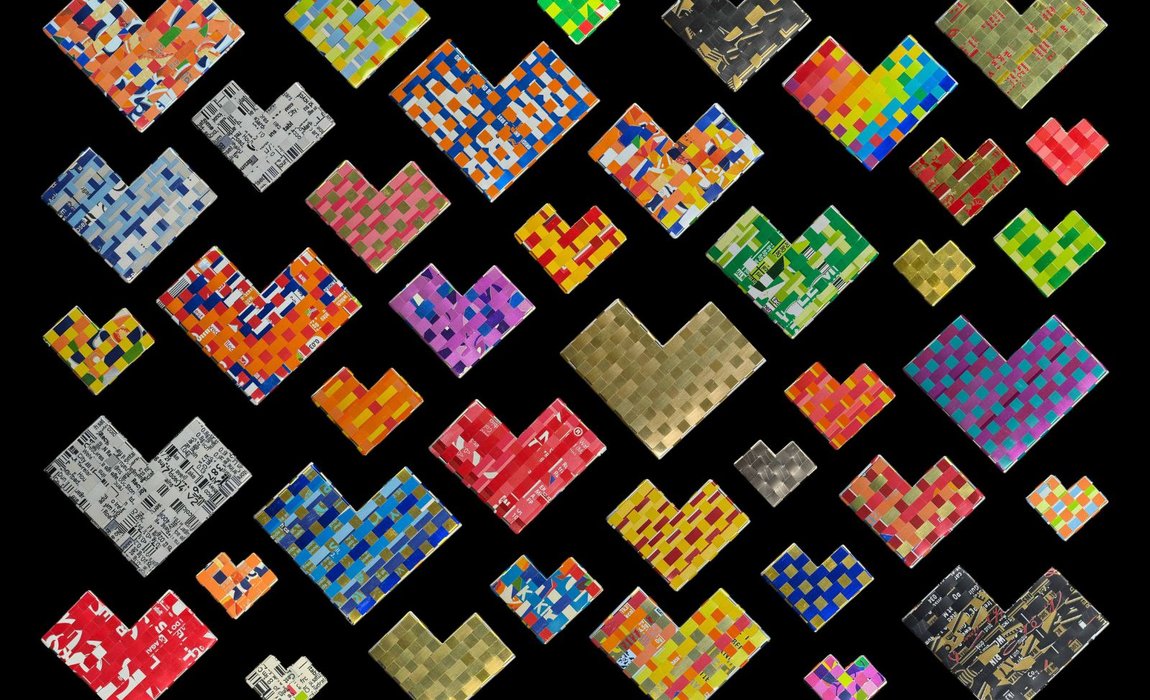
At the same time, conversations with the Goldsmiths’ Centre made it clear that to show at Goldsmiths’ Fair, I’d need to work in precious metals. So while my techniques –weaving and folding - remain the same, my materials have evolved. I now work with gold, titanium and niobium, using anodising to bring in colour. Discovering anodising was huge, allowing me to introduce colour in my own way rather than following my family’s enamelling tradition.
I’m a third-generation silversmith, which has been both a blessing and a curse. Now I see it as a huge blessing, but at university, I struggled with it, wanting to make a name for myself based on my own work, not my family’s. At Shine, for example, I asked my mum if she wouldn’t attend so as to experience the show on my own and see how people engaged with my work for what it was. This was my first chance to get my name out there as an individual. It was one of the best things I could have done to build my own confidence, and I was so grateful to her for respecting my decision.
A warm welcome
“Whilst I was getting ready for my degree show at Glasgow School of Art, my mum, also a silversmith, spotted a post about Shine on the Goldsmiths’ Centre Instagram account and forwarded it to me. Most of my work was base metal – brass, copper, steel – rather than precious metal, so I assumed they’d say no. Being from Northern Ireland, I didn’t know much about London or the Goldsmiths’ Centre, but I applied anyway – and got in. I remember thinking, ‘Gosh, this is exciting!’
Shine was my first introduction to the Goldsmiths’ Centre, and I still constantly tell people to apply. Coming from Northern Ireland to London felt huge; I’d only been once or twice before for New Designers and with family. During Shine, I stayed with a friend, had just bought a green suit, and I remember feeling really confident.
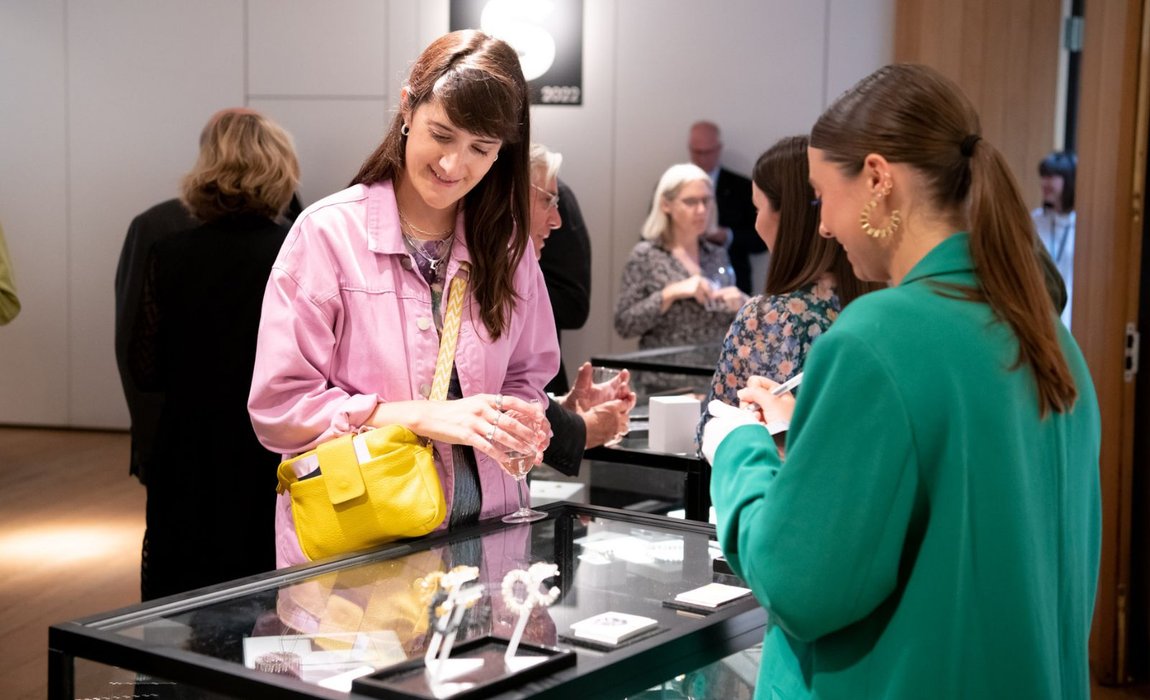
The event itself was amazing. My work received an incredible response, and I was honestly blown away. Everyone was so friendly and encouraging, asking about my work, where I’d started, and how I’d arrived at it. Being surrounded by other makers also helped - if you felt nervous, someone would say, “Me too,” and it instantly made you feel better.
What really stood out was how welcoming everyone was. Through Shine, I met a cohort of people in similar positions, immediately gaining a network. Some were London-based, giving me insight into what it might be like to live and work there as a jeweller or silversmith.
Looking back, one reason I enjoyed it so much was the in-person selling. You have one day at the Goldsmiths’ Centre, with training beforehand, and it feels very accessible. Someone even told me, “If you like this, you should apply for Goldsmiths’ Fair - it’s basically an introduction.” Shine is a great way to test whether you enjoy that environment because if you don’t like a one-day selling event, a seven-day fair probably isn’t for you.
From Photos to Face-to-Face Sales
“Shine and the Goldsmiths’ Fair Emerging Bursary programme have helped massively, especially as a business owner. I’ve always wanted to turn my work into a business. Growing up in a creative family, my dad and I watched Dragon’s Den and The Apprentice; that side of things was always in the back of my mind. At art school, there was a bigger focus on design and creativity rather than the logistics of running a business. Time spent discussing profit and loss at the kitchen table with my mum growing up was therefore invaluable to me.
The photography training during Shine was hugely helpful. I learned how to position work, think about composition, place objects in the frame, and shoot in landscape. Some of it I knew, but it refined my thinking and made me more intentional. Later, during the Goldsmiths’ Fair Emerging Bursary programme, the face-to-face selling training with Zoe Cooper was amazing. Very hands-on – almost a bit like Wolf of Wall Street, like “sell me this pen.” She’d have you practice at your stand, then stop you and suggest improvements: maybe comment on what someone’s wearing or connect to their interests. What I loved was that she didn’t try to change who you were - just polished it. She wasn’t afraid to say, “No, that doesn’t work.” Even after training, she generously gave an hour-long feedback call before my first Fair, helping me improve, which made a huge difference.
The Goldsmiths’ Centre’s Getting Started Online programme also filled a major gap. For the first time, anyone explained things like registering a business or submitting a tax return. I was initially overwhelmed, but because everything was recorded with transcripts and slides, I could revisit it whenever needed
Community breeds confidence
“From a confidence perspective, the biggest impact has been the community. Through Shine, Spotlighting Getting Started, and the Goldsmiths’ Fair Emerging Bursary, I’ve met many makers navigating the same challenges, which immediately makes you feel less alone. The Goldsmiths’ Centre does a fantastic job facilitating these connections, and I’ve never felt nervous attending events because I know I’ll recognise at least one person, whether another maker or a trainer. That makes networking feel much more natural.
From Shine onwards, we created group chats and organised meet-ups to build relationships. Early on, it was harder for me to attend regularly - studying in Reading made travel costly - but social media helped maintain those connections. Being part of this network has also exposed me to different ways of working. I remember meeting someone who outsourced much of their
process - setters, polishers, CAD - and realising how different that was from my hands-on approach. It made me reflect on my own practice and better understand advice around outsourcing.
It pays to be yourself
“For me, face-to-face contact with clients is huge. I don’t sell online at all. My website isn’t transactional, and people often ask where they can see my work. I really value meeting the people who buy my pieces, seeing them try things on, and having those conversations – maybe partly because I’m Irish and love a chat.
At first, I overanalysed every interaction, worrying if I was saying the right thing. Over time, I’ve learned to just be myself. Whether I’m talking to a major collector or a student, I try not to change how I speak. The more I do it, the more comfortable I become.