The Shape of Resilience: Six Months into Shivani Chorwadia’s Business Catalyst (Large) Grant
Sometimes a single defining moment in life can redraw the map of a creative practice. Illness, loss, or sudden change can strip away hesitation and lend a fierce clarity – a sense that now is the time to take risks and make work that feels true.
For jeweller Shivani Chorwadia, that moment came in June 2023, when a sudden, life-threatening case of bacterial meningitis left her in intensive care, temporarily visually impaired and relearning how to navigate the world. Months of recovery silenced the often toxic clamour of social media and the pull of external voices, uncovering a braver, more instinctive artistic voice.
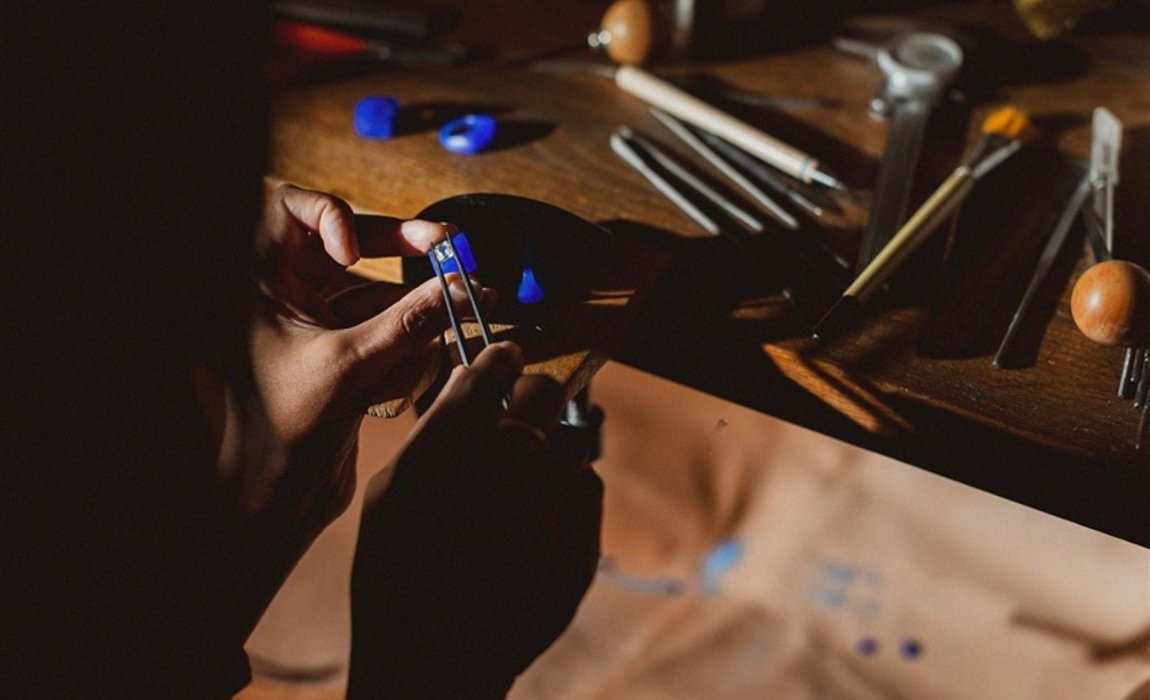
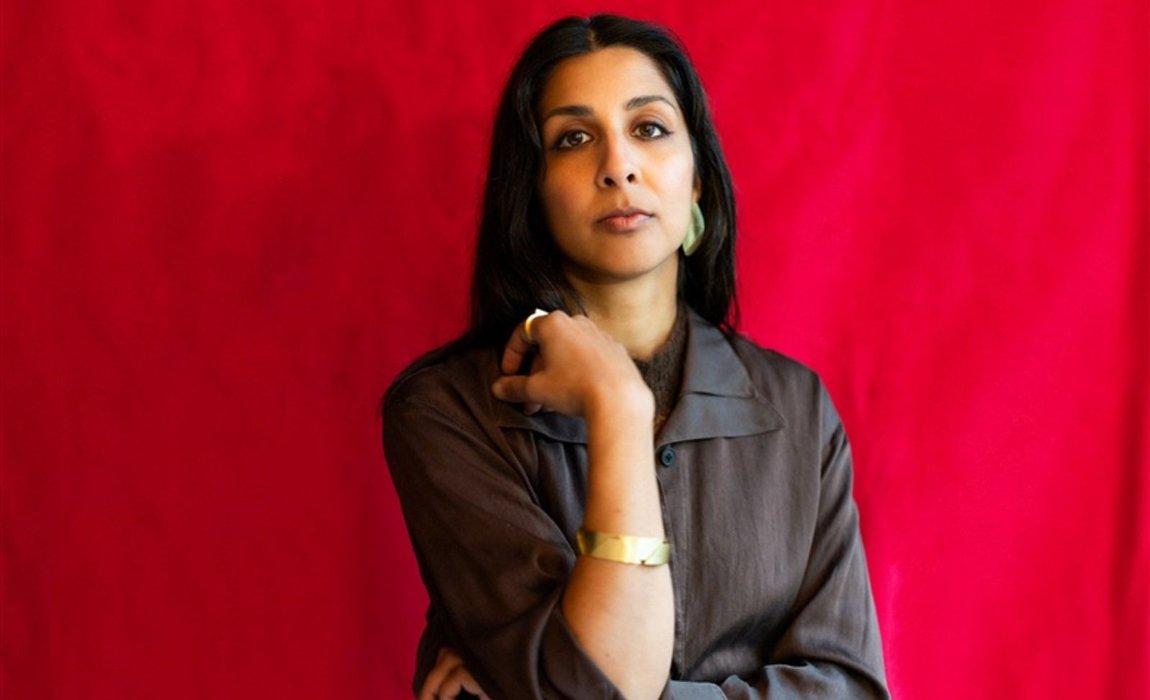
Today, Shivani channels that clarity into jewellery that feels both ancient and unmistakably modern. Carving directly into wax and embracing the unpredictability of form, she has stepped beyond perfectionism in design and is focusing on work alive with touch and movement.
In 2025, the Goldsmiths’ Centre offered support with this new creative vision. Shivani was one of two designers offered a Business Catalyst (Large) Grant, funded via the Goldsmiths’ Foundation. The grant - up to £7,000 - supports UK jewellers and silversmiths to develop new skills and expand their practice. For Shivani, it arrived at the perfect time, enabling advanced training in wax carving and CAD, and aiding the launch of an ethically sourced collection that embodies the courage and clarity hard-won through her recovery.
Six months into her training, we caught up with Shivani to hear in her own words how the award is shaping her practice so far.
Early Creativity and Discovering Jewellery
“‘There was nothing in my family background to suggest a creative path - no makers at all. I had originally applied for English Literature, but right before the deadline, my mum said: “I think you should do art - that’s what you’ve always loved”.”
I had never been especially encouraged to pursue anything creative, but I think she could see how unsettled I was. Two weeks before the course began, I presented my A-level art portfolio and was accepted into an art foundation course.
During this foundation, I initially thought I wanted to do fashion design, textiles or pattern-making, mainly as a way to build a portfolio to apply for those areas. We were given open briefs and could use any material. Everything I made was small-scale, three-dimensional, and intricately detailed. My tutor said: “Have you ever considered jewellery?” I hadn’t even realised that was an option.
Looking back, I realise that I had always been making bracelets and intricate things as a child, but I hadn’t thought of it as a career. When I tried working with fabric, I found it difficult because of the way it drapes and moves, but in the silversmithing workshop at college I felt instantly at home. I tried soldering and loved the whole process. So I applied to study silversmithing at university and fortunately got accepted into Birmingham School of Jewellery - that’s how it all started.’
Building A Career
‘I am based in Malvern, Worcestershire, and my studio is now at home, which fits around family life.
My career has taken a few turns. After I graduated in 2005 from Birmingham School of Jewellery with a degree in jewellery and silversmithing, I began setting up my own practice with a bursary from Alloy, a local non-for-profit jeweller’s group in Hereford. They offered a funded graduate programme and a shared workshop above the theatre, giving me free access for a year while I established myself. I also worked part-time for a jeweller-goldsmith, learning business skills and gaining insight into the industry. He had exhibited at Goldsmiths’ Fair for about 15 years and took me to trade shows in London, which opened my eyes to the world of gemstones and working designers.
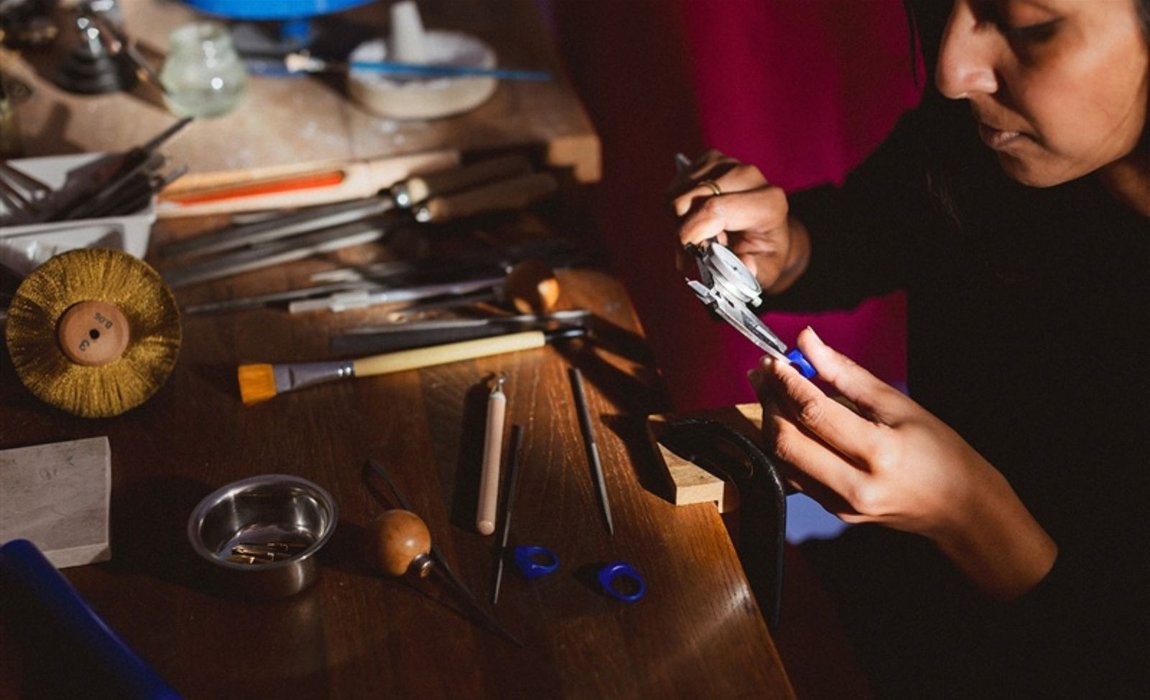
I continued working for myself, spending a year in a shared Birmingham workshop before setting up in my garage to avoid commuting. I exhibited at Origin, a London craft fair, for a few years and applied five times for the Emerging Business Bursary at Goldsmiths’ Fair before succeeding. The feedback I received helped me find my design voice, pushing me to create bolder, larger pieces and to invest in myself both creatively and financially.
I exhibited at Goldsmiths’ Fair for ten years. Between the ages 25 and 35, I ran a studio with a gallery at the front and a workshop at the back. It was a steep learning curve and helped me build a local client base. Being outside London, I worried about missing the right clientele, but fairs like Goldsmiths’ Fair and other shows around the country brought clients nationwide and allowed me to keep selling between events.
After the birth of my daughter - I now have two children - I left the gallery to better manage my time and moved my workshop home. Having previously had an external studio open to the public six days a week, it was a relief to work privately, without feeling like a fish in a bowl while visitors watched. With less time to make, I became more selective about what I produced. I also stopped travelling for shows and decided to work exclusively in gold, focusing on bespoke work about eight years ago.’
Illness and Creative Renewal
‘Two years ago, I became seriously ill with meningitis. About a year after recovering and returning to the studio, I reassessed everything: the direction of my work, what felt true to me, and what I wanted to change. Before my illness, the majority my work consisted of engagement rings. I didn’t sell through shops; instead, I worked on bespoke projects remotely, and travelled to London to meet clients, source stones, and buy supplies.
While this arrangement has been great for managing my time, focusing almost entirely on commissions left little room to develop personal work. Fairs, by contrast, require producing a new body of work each year, which keeps creativity flowing. Without that, my own design development felt stagnant. After my illness, I made a conscious decision to rethink everything and explore the future direction of my jewellery practice.
“I began working with a somatic practitioner/sculptor who acted as both coach and therapist, guiding me creatively and helping me process the trauma I had experienced. Coming so close to losing everything made me realise I needed to follow what felt right for me. She helped me trust my intuition, rather than doing what I thought was expected or felt commercially safe.”
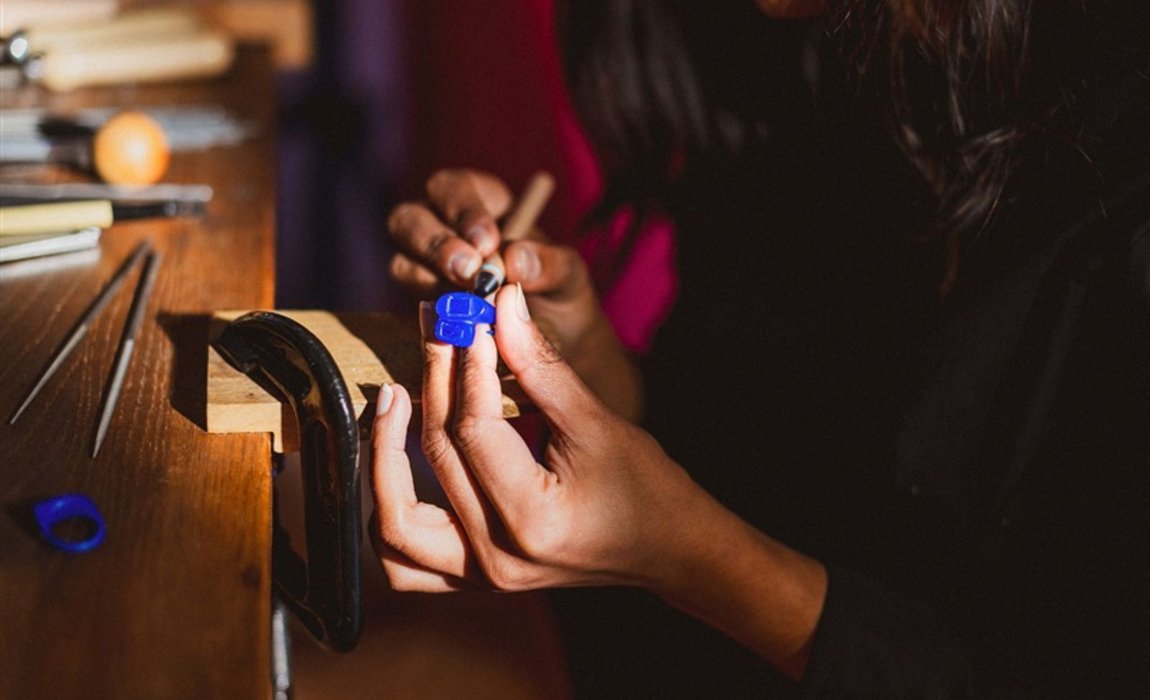
During this time, I engaged in writing, image-making, and mood-boarding, really delving into imagery that resonated with me. This new work started to emerge. Unlike working directly in gold and silver, where you build using wire or sheet, wax allows you to carve away from a solid piece, the forms are naturally sculptural. I had begun to experiment with wax just before my illness, and loved that the process was so intuitive.
My mindset has gone through this huge shift since having meningitis. Facing that experience made me realise I already have the tools to do achieve what I want. Before, I lacked confidence in my own judgement when it came to business decisions, often playing it safe. Now, I know life is too short for that. I work from a deeper place and create pieces that are an intuitive expression – because for any creative person, that’s the starting point.
When I saw the Business Catalyst (Large) Grant was available, the timing felt perfect. I knew I needed to take a leap, and the grant has enabled me to do exactly that: launch a new collection and take a bold step forward in my career by developing an entirely new body of work.’
A New Aesthetic
‘The new pieces are very different from what I made before, partly because the material I’m using to explore forms has different qualities. My earlier work was loosely influenced by architecture - square, geometric, symmetrical, and quite perfect-looking. The new pieces show the mark of the hand – they are organic, asymmetrical, and more voluminous. There’s a feeling of freedom and flow.
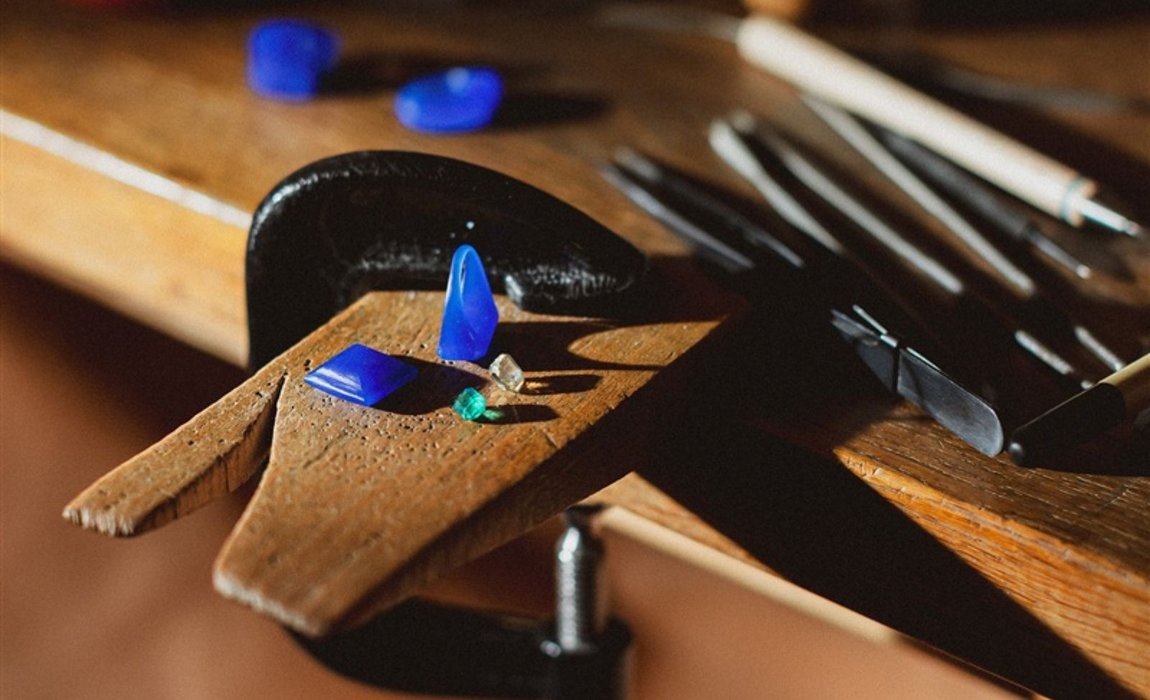
I haven’t yet shared the new pieces yet, and I don’t know how they will be received. It feels out of my control but at the same time exciting. Creating something you feel deeply connected to feels vulnerable. Each new piece gives me a rush and leads a new discovery. I now have a large collection of waxes ready to cast or develop further, and I’ve taught myself new carving techniques to achieve the shapes I envision.
My process often begins with a freehand sketch. I’ll take an element of that sketch and draw a rough 2D shape for the top view, not knowing how it would look from other angles. As I carve, new shapes emerge that I couldn’t have imagined. Working in wax is for me, designing in 3D, which has been a wonderful discovery. Removing myself from social media helps me keep external noise to a minimum, allowing me to trust my intuition more fully.
Daily practices also feed my creativity. We live on the Malvern Hills, I can see the peaks from my studio, I walk up there most mornings with no distractions, my phone on aeroplane mode. Just that routine movement gives space to ideas, whatever comes up I record them in my notes app. Back home, I experiment, draw, or carve. The process is cyclical and feeds my creativity.
Now, I’m exploring completely new starting points, drawing inspiration from ancient art and the shapes societies have used, overlapping stories across time. I’m fascinated by how those forms repeat and what they say about the human journey. My new pieces sit at the intersection of the ancient and the modern – they are sculptural, tactile and alive with movement.’
The Role of the Grant
‘I’ve already been learning new skills, but the grant is important because this is the point where I really want to put everything into this new work. It’s been ten years since I had my kids and I have much more time and headspace now. Without the grant, I’d have to take baby steps, still focusing on selling my current work until I could launch the new work. I’d never invested in areas like PR or business support before, and the grant has given me the opportunity to do so – something that feels important for the future.
“It gives me breathing space, allowing me to seek advice and work with people I wouldn’t otherwise have access to. For the last couple of months, I’ve been working with a design business advisor. When we first met, I said: “I know how to approach design side of my work, but I was never taught the business side and had to work it out as I went along.” Even though listening to advice from other designers was helpful, it’s not the same as talking to a professional who truly understands that business world.”
Her guidance has been so helpful - she’s examined every aspect of my practice and helped me shape the launch, something I wouldn’t have had the capacity to manage while focusing on developing the work.
It’s hard to predict the full impact of the grant from where I am now, but I know it will be hugely positive. It has allowed me to do things sooner and to do more than I could otherwise. Without it, I wouldn’t have been able to invest in the necessary tools, training, guidance, and advice and I couldn’t have launched this collection on my own terms.
The grant also enabled me to undertake CAD training, which has been really helpful. Since then, I’ve continued learning and visited my casting company to speak with their CAD designers. The experience has started a kind of domino effect, opening up new possibilities for what I can do next.’
Looking Ahead
‘The new work will be produced from Single Mine Origin gold. This is really important to me, as is the sourcing of the stones. I want my business to have a positive impact all along the line, not just at the end point. I don’t want to produce something that takes away from mining communities or the local environment. If I can make any kind of positive impact in my business, then I will. I think it’s my duty as a business owner to be responsible.
I still love meeting customers and working on commissions, but as a former perfectionist I did struggle with sharing the work on social media. There is always conflicting advice and it’s hard to know where to place yourself. I won’t give it so much energy now, sharing what feels right and keeping on moving forward is what’s served me since my recovery.
I’m 42 now and feel like I’m only just getting to where I want to be in terms of knowing myself as a designer and where I want my work to sit. It takes time to learn. It depends whether you see the work as a creative endeavour or a business one, and where your focus lies. For me both matter but it will always tip towards the creative side- and the grant is helping me balance them.’