The Goldsmiths’ Centre Supports Astrid & Miyu’s new Jewellery Foundation Certification
As businesses grow, they eventually face a decision: whether to simply focus on production or to train the people who will shape the industry after them.
In an era defined by rapid technological change, evolving consumer expectations and intensifying global competition, the UK jewellery, silversmithing and allied industries find themselves at a pivotal moment. Our sector is built on heritage, yet sustained by innovation; rooted in centuries-old craftsmanship, yet increasingly shaped by digital and experiential innovation. At the heart of this delicate balance lies one constant: skills.
And the future of the UK industry will be defined by how boldly we invest in people. Approaches that unite commercial ambition with educational expertise offer a powerful model for building a resilient, skilled workforce that can take businesses forward.
Recognising this and in a significant step for the wider trade, the Goldsmiths’ Centre has announced a collaboration with Astrid & Miyu to externally verify their new Jewellery Academy: Jewellery Foundation Certification, signalling not just an ability to adapt, but a determination to actively shape what comes next as explained by Sarah Jane O’Hare, Head of People Growth at Astrid & Miyu:
“The Jewellery Foundation Certification is the first programme within the Astrid & Miyu Jewellery Academy, created as a space for our people to learn, grow and innovate together. As pioneers of permanent jewellery in the UK, we wanted to formalise our craft and set a best-in-class standard for training jewellers the A&M way. What makes it special is that it was driven by our store teams themselves, people across the business kept asking to learn the craft behind what we do. The certification creates a pathway for our people to learn the skills behind permanent jewellery and qualify for jeweller roles within the business.”

Under this partnership, the Goldsmiths’ Centre will verify assessment decisions, provide guidance on best practice and work closely with Astrid & Miyu to identify areas for refinement and continuous improvement. Such external verification is far more than a procedural exercise. It signals a commitment to rigour and transparency. For jewellery and silversmithing businesses investing in structured training pathways, independent oversight provides reassurance to staff, customers and the wider trade that standards are robust and credible. In an industry where trust is paramount, this matters.
This particular training programme is designed to offer Astrid & Miyu staff a clear progression route within their careers. For employees, this represents more than a certificate; it offers recognition, motivation and a tangible sense of professional development. For the business, the implications are equally significant. Well-structured progression pathways can enhance employee wellbeing, strengthen engagement and improve retention, reducing the financial and cultural costs associated with high staff turnover.
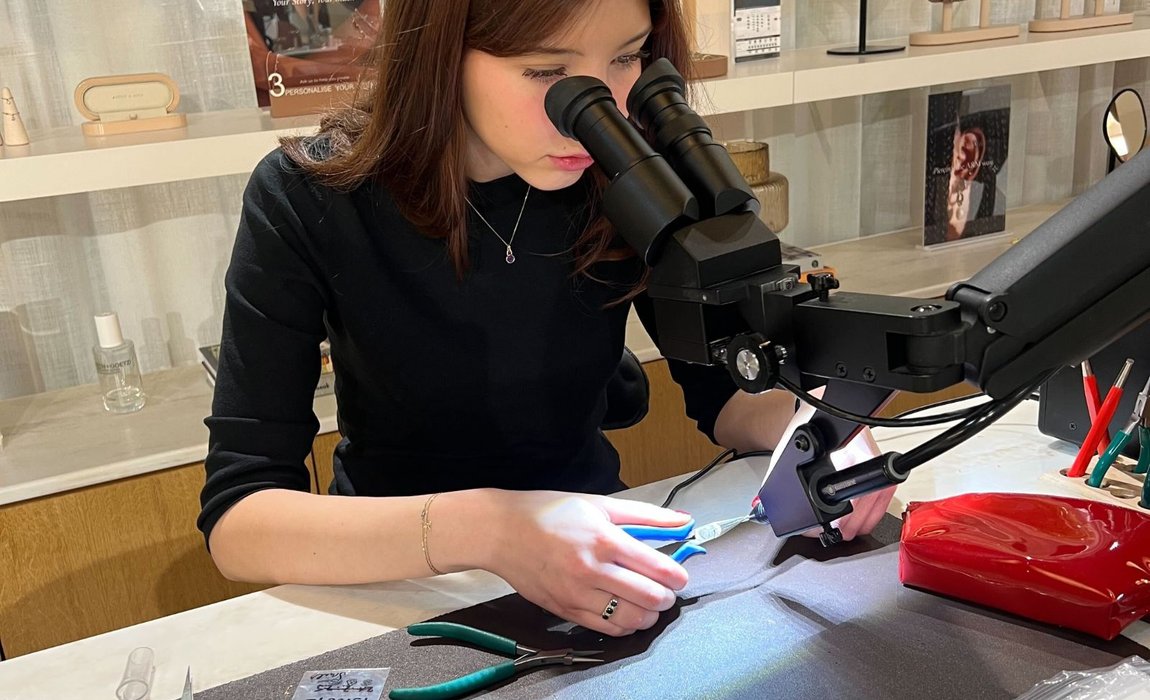
Moreover, a skilled and confident workforce has a direct impact on organisational performance. In retail environments, knowledgeable staff elevate the customer experience, reinforce brand authority and contribute to higher conversion rates – something that is core to Astrid & Miyu. Across the board, clarity around standards fosters consistency, accountability and pride in workmanship.
Explaining why the collaboration between the Goldsmiths’ Centre and Astrid & Miyu came about, Sarah clarifies:
“We wanted the Jewellery Foundation Certification to have real credibility, so partnering with the Goldsmiths’ Centre for verification was a natural choice. They are one of the most respected institutions supporting the jewellery trade in the UK, with deep expertise in craftsmanship and training. Working with them ensures our certification meets recognised industry standards and gives our trainees confidence that the skills they’re learning are truly professional. It also connects our in-house training to the wider jewellery craft community.”
From the first drawing in a designer’s sketchbook to the final polish at the bench; from the considered curation of a retail display to the precision of stock control and administration, jewellery and silverware are never the product of a single hand. And maintaining and developing these skills across the industry is not optional – it is fundamental. Without continual investment in training and professional development, the industry risks diluting the very standards on which its reputation depends. To uphold quality, remain competitive and nurture the next generation of talent, the UK jewellery sector must treat skills not as a cost, but as critical infrastructure.
As an educational charity, the Goldsmiths’ Centre occupies a unique and vital position between formal education and commercial practice. Its mission has long been to bridge the gap between what is taught and what the industry needs. Over years of assessing and verifying recognised qualifications, the Centre has built expertise in developing standards. More recently, it has evolved the Goldsmiths’ Centre Jewellery Foundation Programme into a self-certified course with industry endorsement. This is a move that reflects both confidence and maturity in its approach to quality assurance. This accumulated experience now enters a new phase.
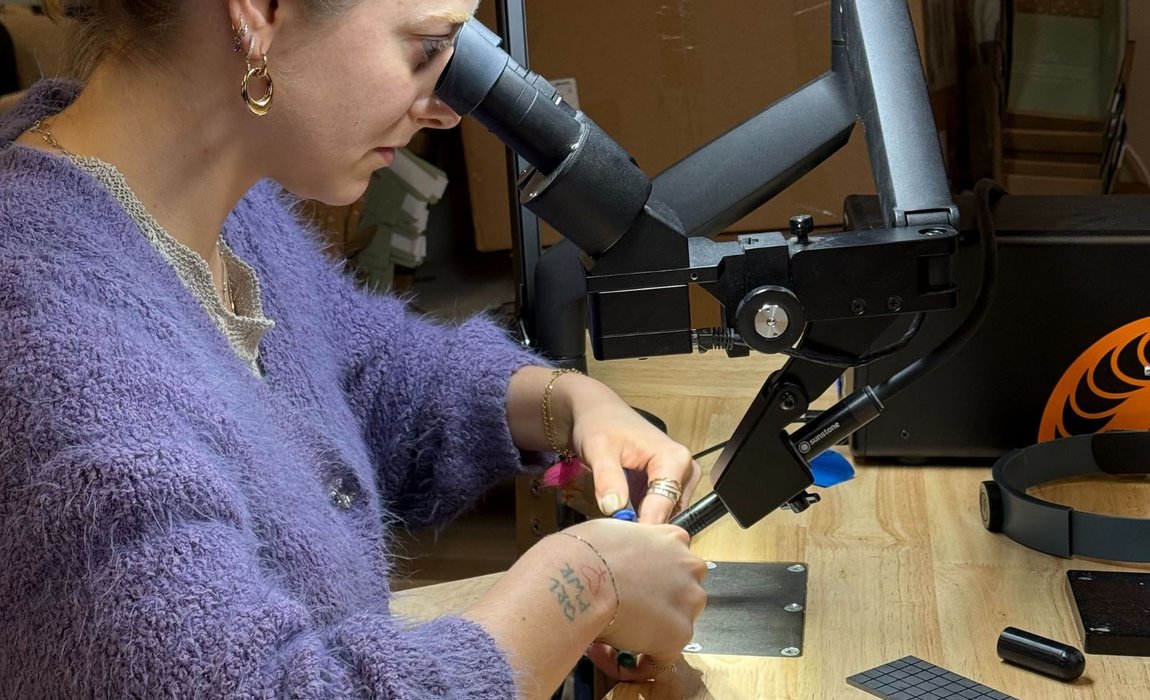
As the UK jewellery industry confronts both challenges and opportunities – from sustainability demands to digital transformation – collaborative approaches such as this set a compelling precedent. By combining commercial ambition with educational expertise, the sector can build a resilient, skilled workforce that supports every link in the chain.
As businesses grow, many reach a point where they begin to formalise how they train, support and develop their teams. If your business is considering how best to structure progression, upskill staff or embed clear standards across your team, the Goldsmiths’ Centre welcomes conversations with businesses that are ready to take that step.
The message is clear: safeguarding the future of the industry depends on investing in people. Through partnerships that champion excellence and uphold standards, the industry can demonstrate that it is not merely reacting to change but actively shaping it.