Designing Without Limits: Katherine Brunacci’s Six Month Journey into her Business Catalyst (Large) Grant
Treasure is Katherine Brunacci’s language – ancient, glittering and seeped in romance and magic. Six months into her Goldsmiths’ Centre Business Catalyst (Large) Grant, the Australian-born jeweller, gemmologist, and valuer is turning that love of relic and myth into daring new work.
One of only two makers to receive the 2025 grant – worth up to £7,000 and funded through the Goldsmiths’ Foundation – Katherine is using the support to master micro-pavé setting under the mentorship of celebrated setter Harry Forster-Stringer.
Known for jewellery that evokes the excitement of unearthed treasure, Katherine moved from Launceston, Tasmania, to London in 2017 to launch Katherine Alexandra Brunacci Jewellery. Her pieces echo the magnificent halls of old cathedrals, where devotion and craftsmanship meet.
Now, with the grant fuelling her next chapter, she’s learning the intricate art of pavé so she can set every stone herself, design without restraint, and let her imagination run as richly as the gold she works with. This is our six month check-in, before we return at the one-year mark to see how far her new skills - and her vision of modern treasure - have carried her.

Falling in Love with the Bench
‘Growing up in Australia, I was drawn from an early age to antiques, old objects, and craft. My jewellery journey began with creating beaded pieces, which I sold at craft markets. During my final years of school, I took after-school jewellery courses, and that was the spark - I completely fell in love with it. From there, my journey truly began.
I went on to pursue a Bachelor of Fine Arts, majoring in gold and silversmithing. The more time I spent at the bench, the more I loved it. It offered me solace and complete escapism - I could lose myself entirely in the work. I loved starting with just raw materials and transforming them into anything I could imagine. What I create isn’t disposable; it’s enduring, capable of being handed down through generations. Jewellery carries deep sentimental value - engagement rings and wedding rings, in particular, hold so much symbolism - and I feel privileged being a part of people's lives during these big, special moments.’
Creating Modern Treasures
‘I've always been fascinated by history, particularly the extraordinary craftsmanship of earlier eras. Without modern distractions like television, artisans devoted immense time to perfecting their craft, which has always been a huge source of inspiration for me. One of my very first trips to Italy had a lasting impact. I'm not religious, but I've always been drawn to religious artwork and iconography. In the medieval period, the best goldsmiths and silversmiths of the time didn’t just make jewellery - they showcased their true talents through relics, religious iconography, ceremonial tools, and decorative pieces.
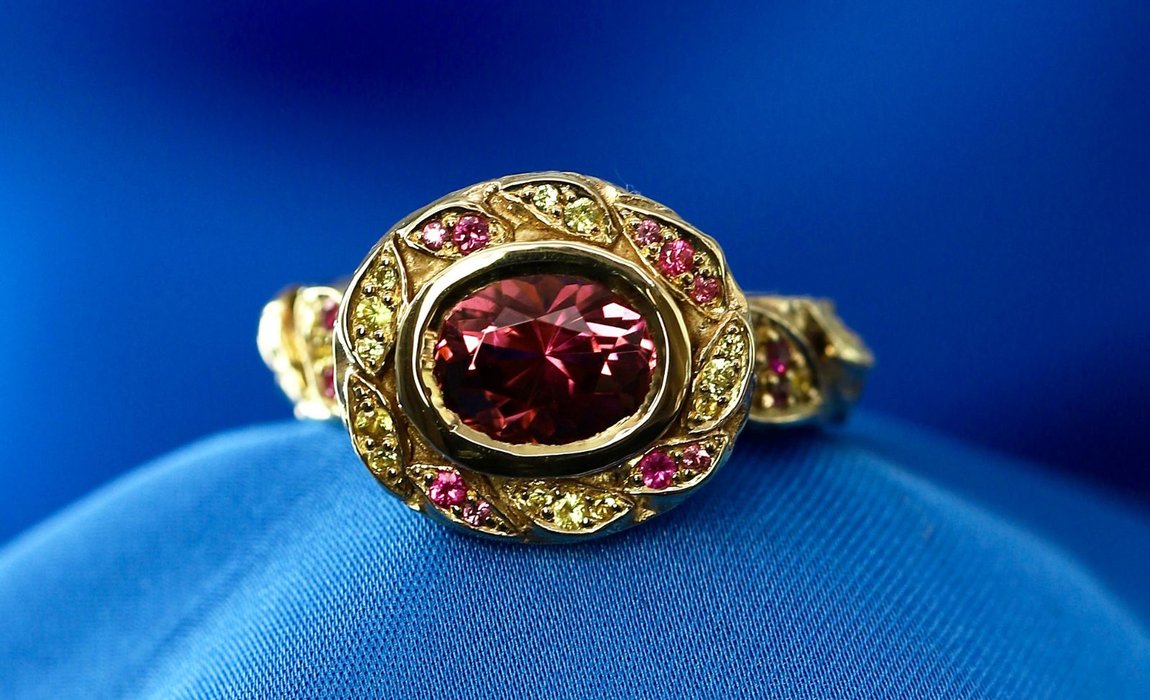
Visiting Italian churches, I discovered their ‘treasure rooms’ - they actually call them treasure rooms - and that really resonated with me. I like to think that I'm creating personal treasures for people too: not just jewellery, but something that will stay with them forever. I realise I’m using the word ‘treasure’ a lot, but it feels right – something they’ll treasure for a lifetime. Compared with the word ‘jewellery’, ‘treasure’ is a bit more romantic and holds more gravity. To treasure something is to hold it close to your heart, and I love that this word reflects the care and emotion I put into every piece.’
Securing the Grant and Shaping the Training
‘I’ve always used pavé work in my jewellery. At a show in Birmingham - Goldsmiths North - I spoke with a few jewellers about outsourcing my pavé work. Sometimes the results weren’t what I wanted, and it was starting to cost a fortune. They suggested, ‘Why don’t you start doing it yourself? It’s not that hard to learn.’ I loved the idea, but with a family and all my earnings reinvested into my work, it felt indulgent to spend on myself.
I did some research and someone told me about the Goldsmiths’ Centre’s Business Catalyst (Large) Grant. I realised this was a skill I could learn that would last a lifetime and feature in most of my pieces, so I applied in 2023. My first application was unsuccessful, though I made the finalist list. The Goldsmiths’ Centre provided feedback suggesting I find a local mentor to help with my training and ensure the funding could also benefit the wider UK goldsmithing community.
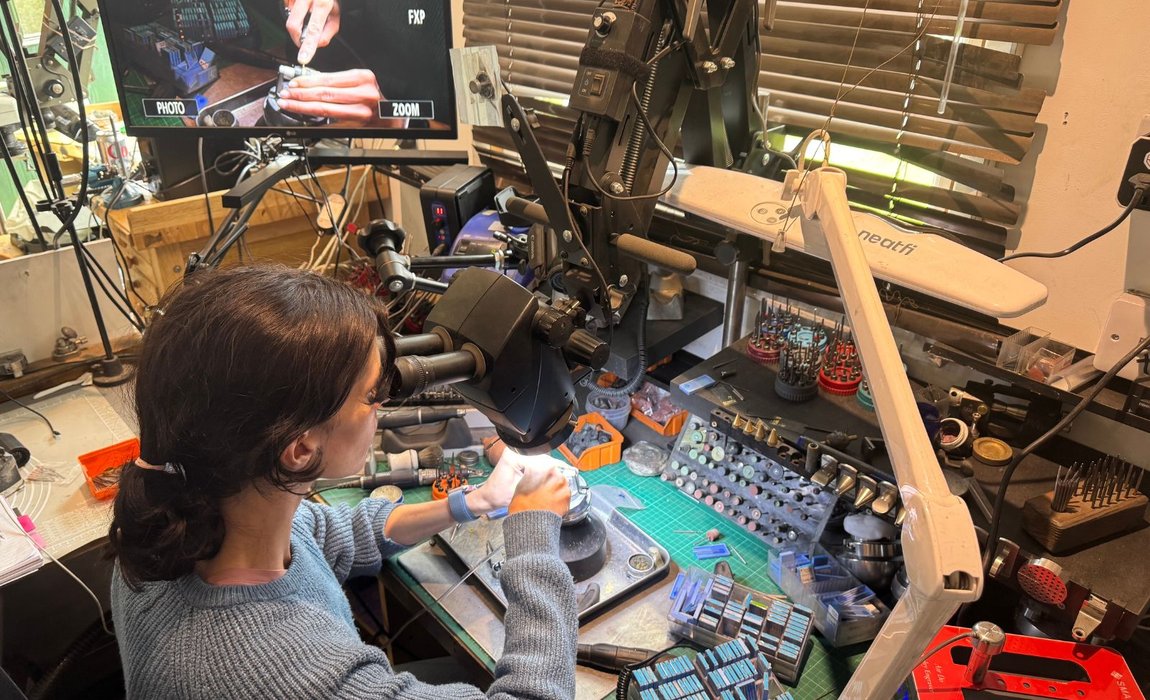
I noticed the Goldsmiths’ Centre was offering stone-setting courses, including one with Harry Forster-Stringer on air-setting micro pavé. I took that course and absolutely fell in love with it - and with Harry as a teacher. The next time I applied for the grant, I asked Harry to be my mentor. With that connection and a renewed passion for pavé work, my second application was stronger. It was no longer a vague interest – I genuinely loved the technique and was ready to train seriously.
It’s hard to pause regular work to learn, but we’ve arranged the training in two-week stints, which fits well with my family life. My husband looks after our young children one day a fortnight while I work with Harry, and I practise in between. So far, it’s working really well.
The mentorship with Harry has been brilliant. We began focusing solely on pavé setting, but it’s grown from there. Harry is an amazing engraver, so further down the line we’ll explore engraving as well. He’s looked at some of my existing pieces and is training me to handle every stage of the work, including setting central stones. Knowing how inspired I am by history, he’s also showing me how to tackle historically referenced settings, techniques that few people can do, which is incredibly exciting.’
Turning Funding into Craft
‘I’ve always loved detail and can never keep things simple in my jewellery design. As a qualified gemmologist, I enjoy applying that knowledge – especially in halo settings or decorative details around a central hero stone. By using varied hues of melee or natural gemstones, you can highlight different tones in the centre stone and create striking visual effects. I sometimes incorporate pavé into pattern work, adding a three-dimensional, colourful layer. With my larger pieces, not just rings, I often create three-dimensional leaf motifs. Pavé is a lovely way to highlight green hues in the leaves and add both colour and texture, giving extra depth to my designs.
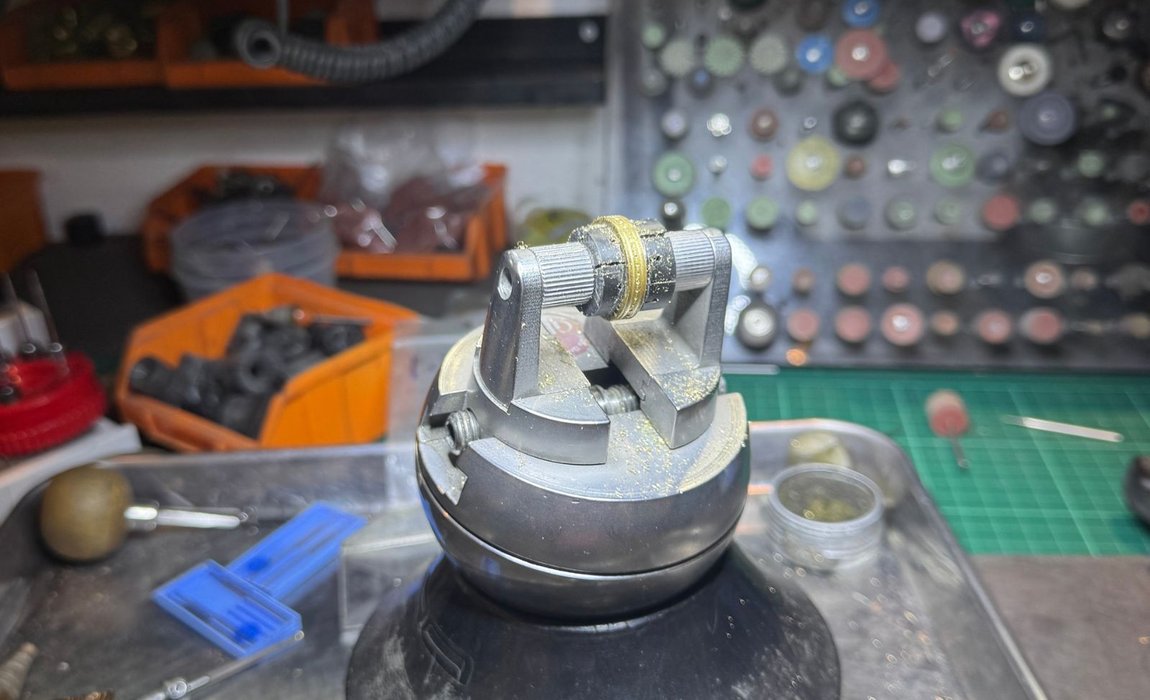
Pavé is a highly specialised skill and it takes plenty of practice. Harry’s advice is simple: ‘practice, practice, practice.’ Many jewellers outsource this work, as stone setters who do it every day become highly skilled. While there’s nothing wrong with outsourcing, I prefer to keep as much in-house as possible. As a jewellery valuer, this knowledge is also useful for insurance claims and assessing whether work is faulty. I can now recognise good and bad pavé setting.
Learning pavé setting will save me a lot of money in the long run. Some of my early attempts of pavé setting, which I showed Harry, weren’t great – but he told me I could do better, and that I already have. That was encouraging, because it felt daunting at first, but it’s going well, step by step. I’m still slow, so it’s not a big time saver yet, but financially it will make a real difference. Previously, design costs often limited my creativity; I’d scale back the amount of setting because outsourcing would be too expensive. Now, I can freely design – adding multiple halos, even pavé setting the entire band. This freedom allows me to create larger, more intricate and special pieces that truly honour the material, especially with gold prices rising. It’s thrilling to make bigger pieces and feel creatively free - like I can just go for it. I’m also playing around more with gemstones. Before, I sometimes felt held back on a design if I couldn’t figure out how it could be made, even when I was outsourcing. Learning pavé has really helped me overcome that hesitation.
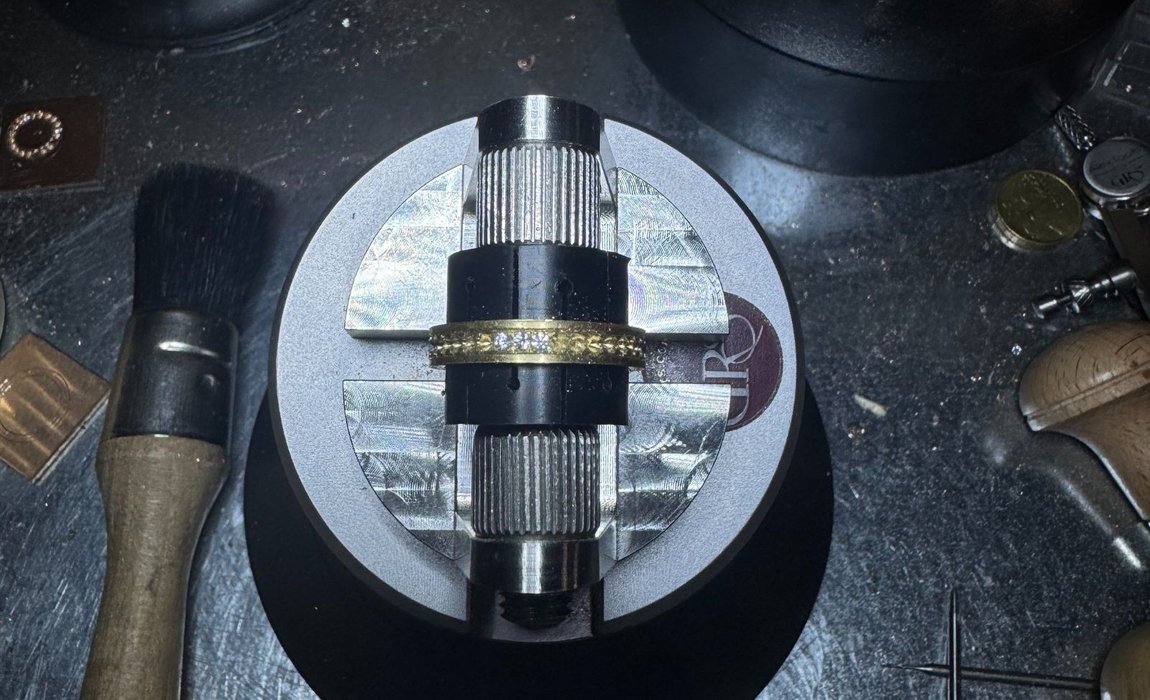
This training has enhanced another part of my work. As a registered valuer, I do some conflict-resolution assessments for the National Association of Jewellers (NAJ). If a customer claims an item is faulty, I can now confidently determine whether the setting is flawed or if the damage is customer-induced. I still get nervous about heirloom gemstones. There are certain stones I’d rather not touch because I don’t want the added stress, so I’d still send those to a master setter. However, I can now assess a setter’s skill. Even if I outsource, I know what good setting should look like and what to watch for.
Giving Back to the Community
I’ve had a little teaching experience in the past, and while I know I need much more practice, I’d love to give back to the community through teaching one day. That’s the beauty of our craft – handing down these skills. I’m always open with my knowledge; people often come to me with valuation or gemmology questions, and I’m happy to help. In the future, I’d be more than willing to teach or assist in any way I can. The Goldsmiths’ Centre feels like a true community, and contributing to that is important to me.
To find out more about the Business Catalyst (Large) Grants, visit www.goldsmiths-centre.org/apply-for-grants/business-catalyst-large-grants