Employing an apprentice
Apprenticeships are a cost-effective way to upskill new and existing staff, transfer specialist knowledge and grow your business. The Goldsmiths’ Company Apprenticeship Scheme supports businesses to recruit, employ and train the next generation of craftspeople. Whether you are a manufacturer, designer-maker or allied trades workshop, the Goldsmiths’ Company Apprenticeship Scheme can help you build a sustainable workforce with the practical skills your business needs.
Help Build the Future of British Craftsmanship
Applications close: Fri 10 July 2026, 5pm
Decisions: August 2026
Apprentice induction: September 2026
Apprentice ceremony: 25 November 2026 (please note that the apprentice, their parent/guardian and employer must be present at the ceremony).
Cost and fees: Employer bursaries available for eligible applicants.
If you are an industry employer, scroll down and fill in our register interest form and a member of our team will be in touch to discuss your business requirements and workforce needs.
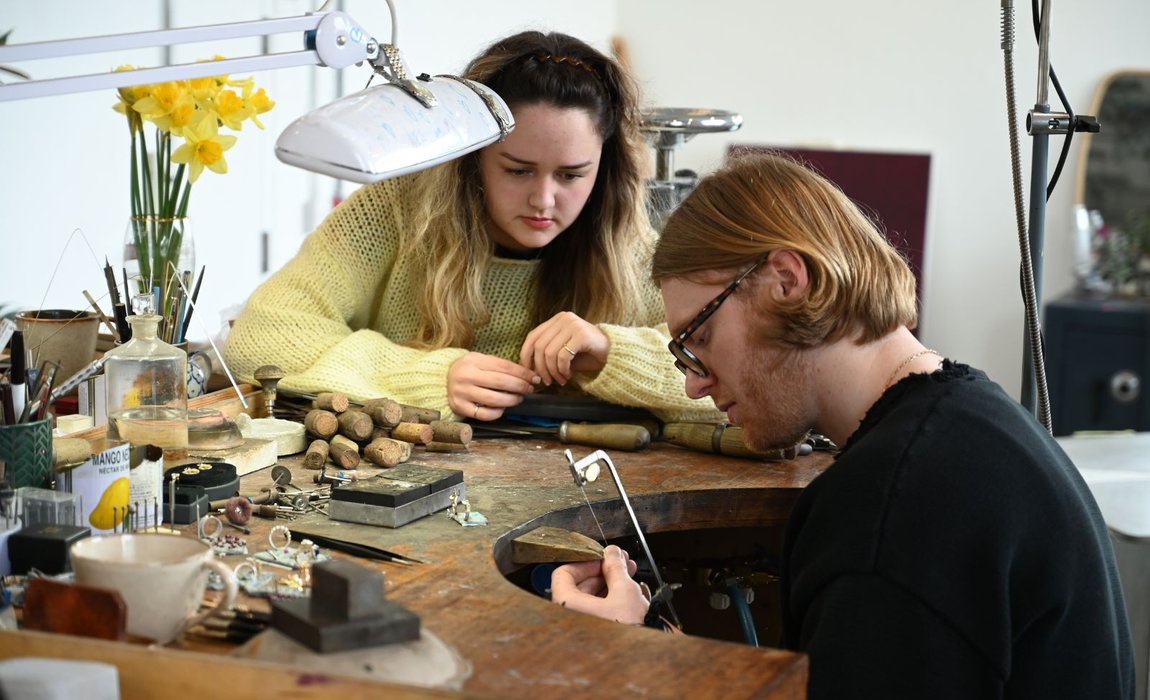
Help Build the Future of British Craftsmanship
The Goldsmiths’ Company Apprenticeship Scheme (GCAS), delivered by the Goldsmiths’ Centre and funded by the Goldsmiths’ Foundation, combines structured training with paid employment. Apprentices learn core industry skills while contributing to the day-to-day activities of your business.
Designed in collaboration with industry, GCAS apprenticeships allow those at the start of their career to develop practical skills, technical knowledge and industry standards across a range of specialisms including:
- CAD/CAM Design
- Stone Setting
- Allied trades including Engraving, Enamelling and Polishing
- Traditional Diamond Mounting and Contemporary Fine Jewellery
- Silversmithing
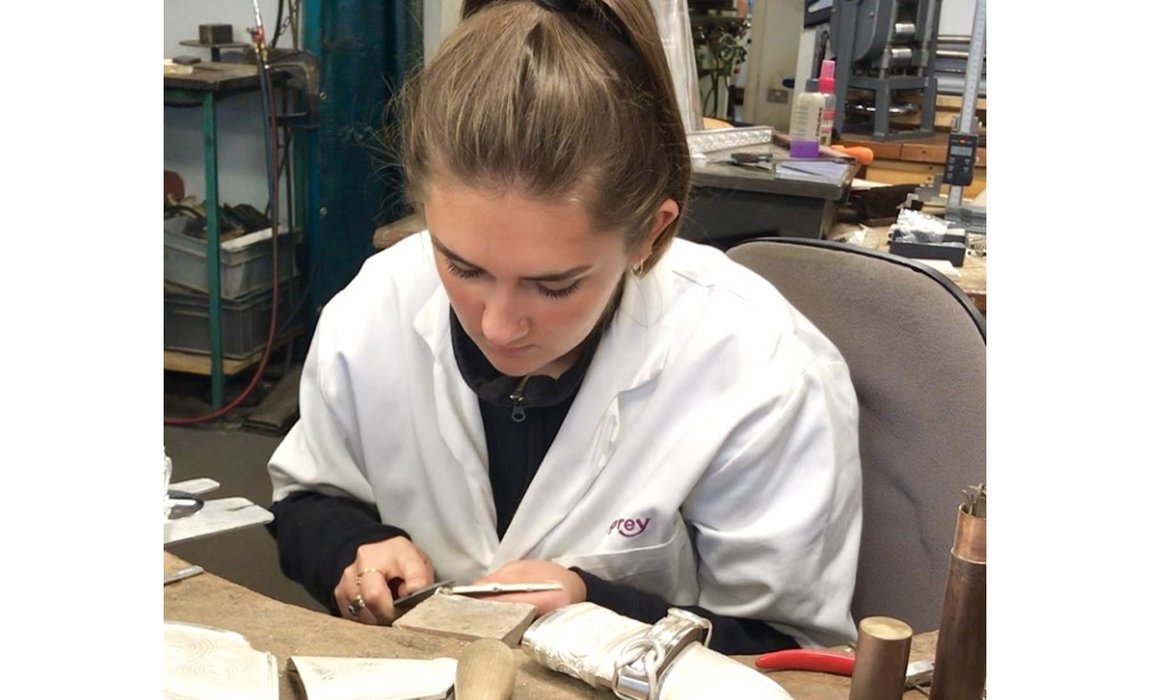
Apprentices earn while they learn, gaining valuable bench skills through your in-house training. The Apprenticeship Team is available to support employers to plan and monitor their training, ensuring that you pass on the specialist skills needed to equip your apprentice for your business and for a future career as a craftsperson. Monitoring takes place quarterly with follow-ups from the Team. Bi-annual in-person events provide you and your apprentice with the opportunity to build your industry network and hear about opportunities.
Day Release, which is free to employers on the scheme, complements your in-house training with a mix of digital, creative, and bench-skills, including CAD and 3D printing; design; setting; polishing and gemmology. These skills, taught by the Goldsmiths’ Centre’s expert craftspeople, will support your apprentice to become a multi-skilled craftsperson and help you fill gaps in your in-house capabilities.
As has been tradition for many years, Goldsmiths’ apprentices pass their final year by producing a Masterpiece – a final piece which demonstrates the range of skills learned during their training. The Team will work with you and your apprentice to agree on a suitable Masterpiece - it could be a customer piece, a portfolio of samples or a one-off bespoke design.
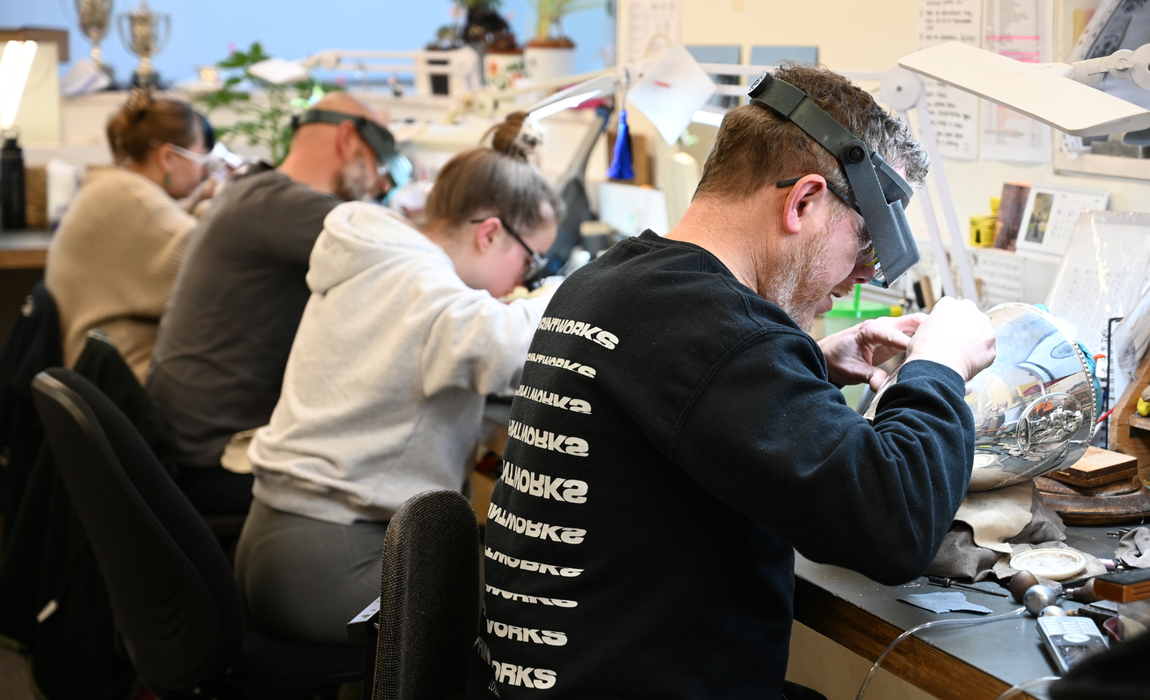


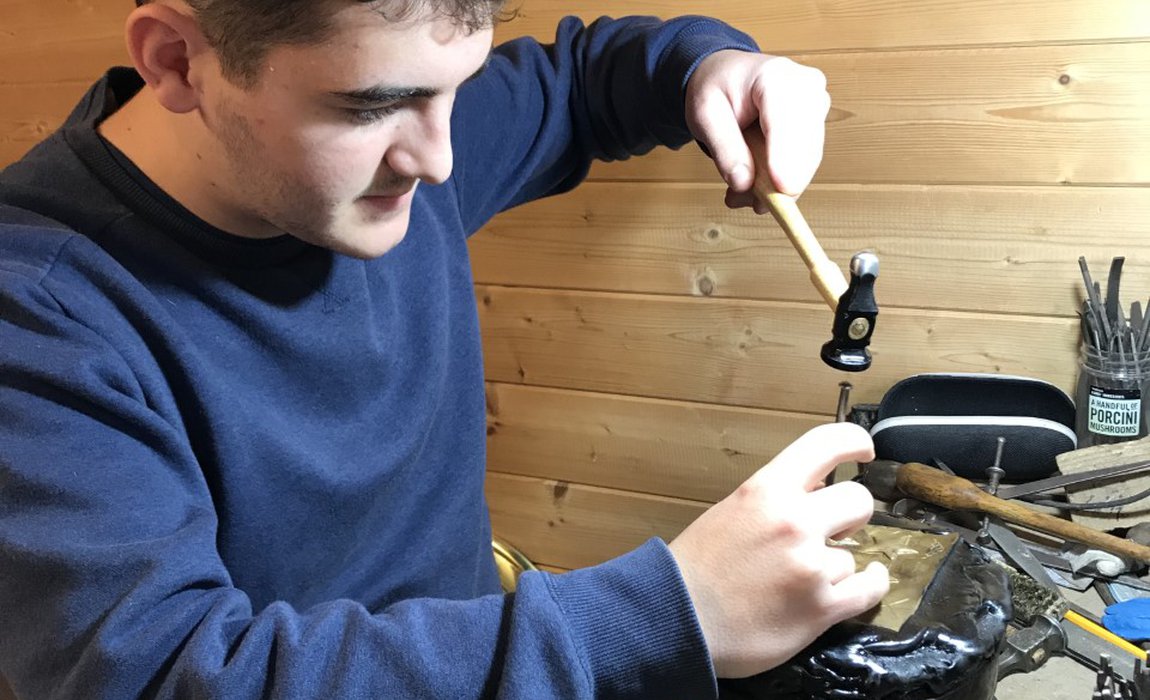

 Masterpiece by Goldsmiths' Company Apprentice Oliver Davies bound to a Master at Graff Diamonds Ltd

 Goldsmiths' Company Apprentice Robert Dean being bound to Master David Webster during a ceremony at Goldsmiths' Hall


FAQs
Employers who want to participate in the scheme should:
- Be employing the apprentice within a UK jewellery, silversmithing or allied trades job role
- Be able to train the apprentice in the skills required by the GCAS standard
- Be able to support the apprentice's development through training, supervision and mentoring
- Allow the apprentice time for off-the-job training at the Goldsmiths’ Centre, London
- Be willing to participate in regular progress reviews including quarterly paperwork and annual feedback
No previous experience of employing an apprentice is required, and support is available throughout the recruitment process and apprenticeship. For employers without someone in mind, speak to the Team about our Jewellery Foundation Programme learners who have completed 10 months training in core technical fine jewellery, setting, design and allied skills and who are prepared for apprenticeships and junior roles.
The term of a Goldsmiths’ apprenticeship is dependent on the apprenticeship specialism and any advanced prior learning that your apprentice may have. The term of the apprenticeship will be discussed with you when you apply.
Years 1, 2 (& 3): During their early years apprentices develop fundamental skills both at work and whilst taking part in Day Release. These include bench skills, manufacturing techniques and design principles; an understanding of workshop practices, health and safety and professional behaviour; and a growing knowledge of materials and digital and technical processes.
Day Release runs for 20 days per year whilst work-based training should be delivered consistently throughout the year. For support with any training questions, speak to the Apprenticeship Team.
As they progress, confidence, speed and competence will grow. Before they enter their final year, apprentices should be showing advanced practical skills, be working on customer pieces, and be ready to take on increased responsibilities.
Final Year: In their final year apprentices must produce a Masterpiece – a final piece which demonstrates the apprentice's skills, knowledge and behaviours. If successful, this piece grants apprentices the Freedom of the Goldsmiths’ Company and is showcased within the Apprentice to Masterpiece exhibition at the Goldsmiths’ Centre. This piece marks the close of the apprenticeship and indicates the apprentice is ready for a career within the industry.
Apprenticeships are a cost-effective way to upskill new and existing staff but funding this training remains one of the biggest barriers. For businesses which cannot afford the full cost of training an apprentice, the Goldsmiths’ Company Apprenticeship Scheme has bursaries available.
Bursaries: Bursaries are available for businesses who need them and last for the full term of the apprenticeship. To apply complete the bursary section of the application form and provide the information requested during the application Workshop Visit. The Goldsmiths’ Centre Trade Advisory Sub-Committee makes the final decisions regarding bursaries.
Apprentice Wages: Employers are responsible for paying apprentices at least the national minimum wage for their age and stage of apprenticeship. The latest information can be found at: www.gov.uk/national-minimum-wage-rates
Return on Investment: Goldsmiths’ Company apprenticeships can help your business to:
- Train staff in workshop specific skills
- Reduce recruitment costs
- Improve staff retention
- Preserve specialist craft skills
- Build long-term workforce resilience
How to take part
Step 1: Register Your Interest
Fill in your details here and a member of the Apprenticeship Team will be in touch to discuss your business requirements and workforce needs.
Step 2: Recruit a Candidate
Recruit a new apprentice or identify an existing employee suitable for apprenticeship training. For employers without someone in mind, speak to the Team about our Jewellery Foundation Programme learners who have completed 10 months training in core technical fine jewellery, setting, design and allied skills and who are prepared for apprenticeships and junior roles.
Step 3: Apply
Complete the Apprenticeship Application Form and submit this with the required information by 5pm on Friday 10 July 2026. The Apprenticeship Team will contact you to arrange a workshop visit. All eligible applications go to the Goldsmiths’ Centre Trade Advisory Sub-Committee for consideration.
Step 4: Induction
If selected, an apprentice induction will take place at the Goldsmiths’ Centre in September 2026. This allows apprentices to meet their new apprentice cohort; spend time at the Goldsmiths’ Centre getting to know the Team; and to complete a practical workshop which helps the Team plan Day Release. Employers and anyone involved in apprentice training is invited to join for a social event.
Step 5: Apprenticeship begins
The official ceremony will take place on Wednesday 25 November 2026 at Goldsmiths’ Hall. This traditional ceremony sees parents / guardians, apprentices and employers come together to record the start of the apprenticeship in the Goldsmiths’ Company’s 12th Apprentice Book (Book 1 dates back to 1327).
Step 6: Ongoing Support
The Team will be in touch regularly through quarterly paperwork, networking events, phone calls and workshop visits. The Team are available to support employers and apprentices throughout the apprenticeship and are on-hand to discuss training, pastoral and employment issues.